

Achilles Tendonitis: When You Should See a Doctor If you’ve noticed a nagging ache at the back of your heel that flares up during walks, runs, or even just climbing stairs, you may be experiencing achilles tendonitis. Achilles tendonitis is one of the most common causes of heel and lower leg pain, particularly among active …


Achilles Tendonitis: When You Should See a Doctor
If you’ve noticed a nagging ache at the back of your heel that flares up during walks, runs, or even just climbing stairs, you may be experiencing achilles tendonitis. Achilles tendonitis is one of the most common causes of heel and lower leg pain, particularly among active adults in the Brookfield and greater Milwaukee area. The good news is that most cases respond well to treatment when addressed early. The key is knowing when home care is enough and when it’s time to see a foot and ankle specialist.
Certain symptoms should prompt you to see an Achilles tendonitis doctor right away:
- A sudden “pop” or “snap” in the back of your leg, especially during activity
- Inability to push off your foot, stand on your tiptoes, or walk normally
- Severe swelling, warmth, or redness along the back of the heel or ankle
- Intense pain that started suddenly without improvement
- Visible deformity or a gap you can feel in the tendon
If your pain has persisted for more than one to two weeks despite rest, ice, and avoiding the activity that triggered it, that’s a strong signal to schedule an evaluation. Waiting it out often allows the condition to become chronic, which can extend recovery time significantly. An Achilles tendon specialist can distinguish simple tendonitis from more serious problems like partial tendon tears, a full Achilles tendon rupture, or issues with the heel bone itself.
Achilles tendon pain can sometimes be caused by other conditions with similar symptoms. These include:
- Retrocalcaneal bursitis
- Haglund deformity
- Posterior ankle impingement
- Plantar fasciitis (which can cause referred heel pain)
- Calcaneal stress fracture
- Deep vein thrombosis (DVT) or infection, especially when swelling, warmth, or redness are prominent
A thorough medical evaluation helps identify the exact cause and guides appropriate treatment.
Home Care Tips While You Wait to See a Specialist
While you’re waiting for your appointment or deciding whether to see a doctor, there are practical steps you can take to manage your Achilles tendon pain at home.
Do:
- Temporarily reduce or stop the activity that triggered your pain (running, jumping sports, long hill walks)
- Apply ice packs for 15 to 20 minutes after activity or when sore, using a cloth barrier to protect your skin
- Switch to supportive shoes with cushioned heels; avoid completely flat or unsupportive footwear
- Try gentle calf stretching once pain is less intense, focusing on slow, pain-free movements
- Consider an over-the-counter heel lift or shoe insert to reduce strain on the tendon
- If pain is right at the heel bone (insertional), avoid aggressive stretching that pinches the tendon against the heel. A clinician can guide safer loading.
Don’t:
- Push through sharp or worsening pain this can turn a minor issue into a serious tendon injury
- Start high-dose anti-inflammatory medications without checking with a healthcare provider, especially if you have kidney, heart, or stomach issues
- Ignore symptoms that last more than one to two weeks or seem to be getting worse
These tips can provide short-term relief, but they don’t replace a full medical evaluation. If your symptoms persist or are severe, scheduling an appointment with an Achilles tendonitis doctor is the best way to get a clear diagnosis and appropriate treatment.
What Is Achilles Tendonitis?
Achilles tendonitis refers to irritation and painful inflammation of the Achilles tendon, the thick, strong band that connects your calf muscles to your heel bone. This tendon is essential for walking, running, jumping, and pushing off during nearly every step you take. When it becomes irritated or damaged, even simple activities can become uncomfortable. For guidance on managing symptoms, see these Achilles tendonitis exercises: stretches and strengthening.
There are two main types of Achilles tendonitis:
- Non-insertional Achilles Tendonitis: Pain occurs in the middle portion of the tendon, typically two to six centimeters above where it attaches to the heel. This type is more common in younger, active individuals and often involves degeneration of the tendon fibers from repetitive stress.
- Insertional Achilles Tendonitis: Pain develops right where the Achilles tendon connects to the heel bone. It’s more common in middle-aged and older adults and may be associated with bone spurs or calcification at the attachment site.You may also hear the term “Achilles tendinopathy” or “Achilles tendinosis.” These terms describe chronic thickening or degeneration of the tendon and often involve more than inflammation alone. Research has shown that many cases include changes in the tendon’s structure, such as disorganized collagen fibers and new small blood vessels.
This condition affects people in their 30s through 60s most frequently, particularly those who stay active through running, walking, or recreational sports. Achilles tendonitis is most common among runners who suddenly increase the length or intensity of their workouts. According to the Cleveland Clinic, Achilles tendonitis is one of the most common overuse injuries affecting the lower leg, with men experiencing it two to three times more often than women.

Common Causes and Risk Factors
Achilles tendonitis is typically an overuse injury. It develops from repetitive stress on the tendon over time rather than a single traumatic event. Understanding your personal risk factors can help you prevent future flare-ups and guide treatment decisions.
Common causes and risk factors include:
- Sudden Increases in Activity: Ramping up running distance, speed, or hill training too quickly is a frequent trigger. A common guideline is to avoid increasing weekly mileage by more than ten percent.
- Tight Calf Muscles: Limited flexibility in the gastrocnemius and soleus muscles increases strain on the Achilles tendon with every step.
- Foot Structure: Flat feet, high arches, or other alignment issues can change how force is transmitted through the tendon during walking and running.
- Inappropriate Footwear: Worn-out sneakers, unsupportive shoes, or frequently switching between high heels and flat shoes can contribute to tendon stress.
- Age and Activity Patterns: Middle-aged recreational athletes, sometimes called “weekend warriors,” are at higher risk due to cumulative stress without adequate recovery time.
- Medical Factors: Obesity increases load on the tendon. Certain antibiotics, particularly fluoroquinolones, have been associated with an increased risk of Achilles tendon rupture and tendon damage. Systemic inflammatory conditions can also play a role.
For those in the Brookfield and Milwaukee area, local lifestyle factors matter too. Running on area trails, working long shifts on hard floors in hospitals, warehouses, or retail settings, or spending hours on your feet at work can all contribute to overuse.
Previous injuries like ankle sprains, a history of plantar fasciitis, or underlying foot misalignment can increase stress on the Achilles and make you more susceptible to tendon pain.
Symptoms: How to Tell If It’s Achilles Tendonitis
Recognizing the signs of Achilles tendonitis early can help you seek appropriate care before the problem becomes chronic. Most people experience pain gradually rather than all at once.
Common symptoms include:
- Aching, burning, or stiffness along the back of the heel or lower leg
- Pain that worsens with physical activity such as walking, running, or climbing stairs and improves with rest
- Morning stiffness in the tendon area that eases after moving around for a few minutes
- Tenderness when pressing along the tendon or directly at the heel bone
- Mild swelling or thickening of the affected area
If you notice the sudden pop, major weakness, or fast swelling, treat it as urgent and get evaluated.
Mild, gradually worsening symptoms are common with tendonitis, but ignoring them can lead to damaged tendon tissue and a higher risk of a complete tendon rupture over time. If you experience pain, tracking when it occurs during versus after exercise, first steps out of bed, or after long shifts at work can provide valuable information for your doctor.
How an Achilles Tendonitis Doctor Evaluates Your Pain
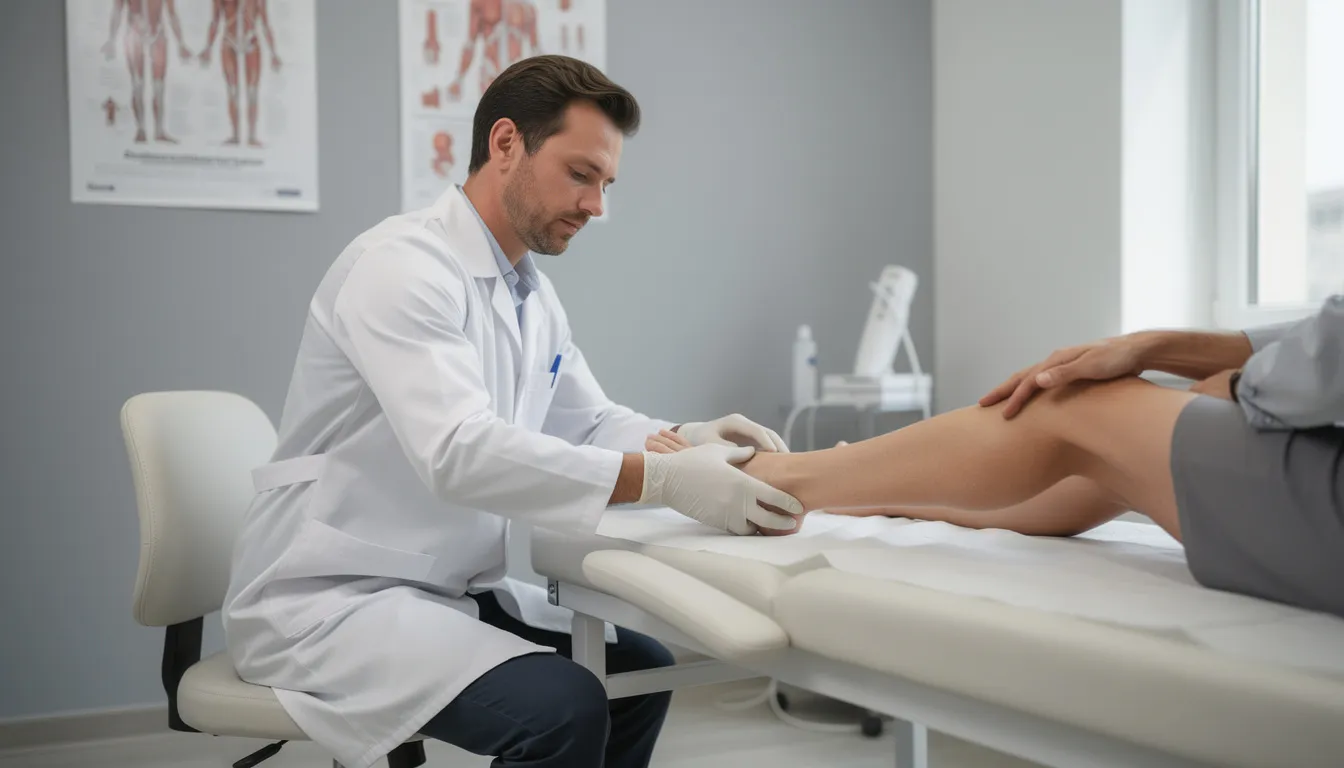
When you see a specialist for Achilles pain, the evaluation begins with a detailed conversation about your symptoms. Your doctor will ask when the pain started, what activities seem to trigger it, what footwear you typically use, your job demands, and any previous foot or ankle injuries. You may want to write a list of answers to questions before your appointment with a healthcare provider to help ensure a thorough evaluation.
The physical exam includes several key steps:
- Gentle palpation along the tendon to identify areas of tenderness, swelling, or thickening
- Assessment of ankle and foot alignment, calf tightness, and range of motion
- Functional tests such as standing on your tiptoes, walking, and single-leg heel raises to evaluate tendon strength and function
- The Thompson test (squeezing the calf to check for normal foot movement), which helps rule out a complete rupture
Imaging tests your doctor may recommend:
- X-rays: Useful for identifying bone spurs or calcification at the tendon insertion point, particularly in insertional Achilles tendonitis cases.
- Ultrasound: Ultrasound can often identify thickening, inflammation, and partial tears, and it is commonly used because it is quick and dynamic. Doppler imaging can reveal abnormal blood vessel growth within the tendon.
- Magnetic Resonance Imaging (MRI): Reserved for severe, chronic, or complex cases, an MRI provides detailed views of the tendon and surrounding structures to evaluate partial or complete Achilles tendon tears.
Most patients do not need every imaging test. Your doctor will recommend studies selectively based on your symptoms, physical exam findings, and how long you’ve been dealing with the problem. The American Academy of Orthopaedic Surgeons (AAOS) provides helpful guidance on standard diagnostic approaches for Achilles problems.
Non-Surgical Treatment Options in Brookfield
The reassuring news is that many people improve over a few months with consistent conservative care, but timelines vary based on severity and consistency. Conservative care is almost always the first approach.
Foot and ankle specialists (often podiatrists or orthopedic surgeons) commonly treat Achilles tendon problems and tailor treatment plans accordingly. At Wisconsin Foot & Ankle Clinic, treatment plans are individualized based on your age, activity level, work demands, and severity of tendon damage. Here’s what conservative care typically includes:
Activity Modification: Temporarily reducing or changing your exercise routine is often the first step. This might mean substituting cycling or swimming for running, or cutting back on long walks until symptoms improve. The goal is to reduce swelling and allow the injured tissue to begin healing.
RICE Method (Rest, Ice, Compression, Elevation): For early pain and swelling, these simple steps can make a meaningful difference. Apply ice packs for 15 to 20 minutes at a time, several times per day, with a cloth barrier to protect your skin. Elevating the affected foot above heart level when resting also helps reduce swelling.
Medications: Short-term use of over-the-counter nonsteroidal anti-inflammatory medications like ibuprofen or naproxen can help manage pain and reduce swelling. However, these don’t address the underlying tendon damage and should be discussed with your healthcare provider, especially if you have kidney, heart, or stomach concerns.
Physical Therapy: A referral to a physical therapist is often a cornerstone of treatment. Physical therapists focus on non-surgical rehabilitation for Achilles tendonitis by designing individualized exercise programs. Evidence-based eccentric strengthening exercises, such as the Alfredson heel drop protocol, is widely used and supported by many studies for chronic Achilles tendinopathy. Stretching programs and gait training can address tight calf muscles and improve overall lower leg mechanics.
Support Devices:
- Custom or prefabricated orthotics to correct foot mechanics and reduce strain on the tendon
- Heel lifts or temporary heel wedges to offload the tendon during healing
- Bracing, night splints, or a walking boot for more severe or irritable cases
Advanced non-surgical care for Achilles tendonitis may include night splints, corticosteroid injections, or laser therapy, although corticosteroid injections are generally avoided directly around the tendon due to risk of weakening it.
Advanced Non-Surgical Therapies Your Doctor May Discuss
For chronic Achilles tendonitis that hasn’t responded to more conservative treatments after several months, additional options may be considered. These advanced therapies aim to stimulate healing in damaged tendon tissue that hasn’t recovered with standard care.
- Shockwave Therapy (ESWT): Some studies show ESWT can help chronic cases, but results vary and it is not a guaranteed fix. At Wisconsin Foot & Ankle Clinic, we use StemWave® focused wave technology, which concentrates acoustic energy at a targeted depth beneath the skin. Your podiatrist will assess whether it is appropriate for your tendon condition.
- Ultrasound-Guided Procedures: Techniques such as percutaneous tenotomy or needle debridement can break up scar tissue or remove unhealthy tissue from within the tendon. Debridement involves removing damaged parts of the tendon and stitching together healthy tissue in surgical treatment for Achilles tendonitis. These minimally invasive options are performed in-office or outpatient settings.
- Platelet-Rich Plasma (PRP) Injections: PRP uses concentrated growth factors from your own blood to promote healing. Research results are mixed, and outcomes can vary, so this option is typically discussed when other treatments haven’t been enough.
Dr. McDonald recommends advanced therapies only after a thorough assessment and when simpler measures haven’t provided adequate relief.
When Is Achilles Tendon Surgery Needed?
Surgery is reserved for specific situations and is not the first-line treatment for most patients. The decision to proceed with surgery typically depends on the severity of your condition and how you’ve responded to non-surgical care.
Indications for Surgery Include:
- Complete Achilles tendon rupture
- Severe chronic tendonitis or Achilles tendinopathy that hasn’t improved after three to six months of consistent conservative treatment
- Significant insertional damage with bone spurs or calcification that continues to cause pain
Surgical Goals May Include:
- Removing damaged tendon tissue and repairing or reinforcing healthy tendon fibers
- Addressing extra bone growth or calcification at the heel that irritates the tendon
- Reattaching the tendon ends and restoring continuity in cases of rupture
- Tendon transfer procedures when significant tendon damage requires reinforcement from a nearby tendon
- Gastrocnemius recession, a surgical procedure that involves lengthening the calf muscle to reduce strain on the Achilles tendon
Dr. McDonald’s fellowship training in advanced foot and ankle reconstruction, trauma, and revision surgery means he’s experienced in both standard and complex Achilles procedures. Whether you’re dealing with a straightforward case or a more complicated situation, the clinic can guide you through your options.
What to Expect With Surgery:
- Most procedures are performed on an outpatient basis
- A period of immobilization in a splint, cast, or boot following surgery
- Gradual return to weight-bearing under guidance, with a structured rehabilitation plan
- Return to full activity, including sports, typically takes four to six months depending on the procedure
The goal is always to review both surgical and non-surgical options thoroughly, helping you choose the safest and most effective plan for your goals and lifestyle. Surgery can be effective for the right indication, but outcomes depend on the procedure, tissue quality, and rehab adherence.
Recovery and Rehabilitation After Achilles Tendon Treatment
Recovery timelines depend on the severity of your condition and the type of treatment you receive:
These are typical ranges. Your timeline may be shorter or longer depending on severity, job demands, and rehab consistency.
| Condition | Typical Recovery Timeline |
|---|---|
| Mild tendonitis with early treatment | 2–6 weeks |
| Chronic tendonitis (conservative care) | 3–6 months |
| Surgical repair | 4–6 months for return to full activity |
Key elements of rehabilitation include:
- Gradual progression of weight-bearing and strengthening exercises
- Ongoing flexibility work to maintain range of motion and reduce recurrence risk
- Return-to-sport or return-to-work planning tailored to your specific job, hobbies, and activity level
Wisconsin Foot & Ankle Clinic emphasizes helping patients return to walking, work, parenting, and the activities they love not just being “pain-free at rest.”
Following your recovery plan closely and communicating with your care team if you experience pain spikes or new symptoms is essential for the best outcome. Many patients can return to their previous activity levels with the right plan, but recovery depends on severity, tissue quality, and rehab consistency.

Why Choose Wisconsin Foot & Ankle Clinic for Achilles Tendonitis Care?
Wisconsin Foot & Ankle Clinic is an independent, specialty foot and ankle practice located at 19475 W. North Ave, Suite 302, in Brookfield, Wisconsin. Our independent structure allows for flexible, patient-focused treatment plans aimed at what’s best for you.
What Sets the Clinic Apart:
- Fellowship-Trained Expertise: Dr. Donald T. McDonald completed advanced training in foot and ankle reconstruction, revision surgery, trauma, and ankle replacement. His background as a former competitive runner gives him firsthand understanding of how lower leg injuries affect active people.
- Personalized Care Plans: Every patient receives an individualized approach based on their activity level, job demands, and long-term goals, whether that’s returning to long distance running, keeping up with your kids, or simply walking without pain.
- Full Spectrum of Treatment: From conservative therapies like bracing, orthotics, and physical therapy referrals to surgical management when needed, the clinic offers comprehensive options under one roof.
- Comprehensive Foot and Ankle Care: In addition to Achilles tendonitis, the clinic treats plantar fasciitis, flat feet, ankle sprains and fractures, sports injuries, nerve pain, arthritis, and diabetic foot problems.
If you’ve been dealing with persistent Achilles pain in the Brookfield or greater Milwaukee area, scheduling a visit is the first step toward a clear diagnosis and a treatment plan that fits your life. Contact Wisconsin Foot & Ankle Clinic to book your appointment online or by phone, and take the next step toward getting back on your feet.


