

For most people, a corn is an annoyance. For someone with diabetes, that same small patch of hardened skin sits in a different risk category entirely, and knowing why can protect your feet. Many people think corns are only a minor nuisance, but the connection between corns and diabetes deserves careful attention. A corn may …


For most people, a corn is an annoyance. For someone with diabetes, that same small patch of hardened skin sits in a different risk category entirely, and knowing why can protect your feet. Many people think corns are only a minor nuisance, but the connection between corns and diabetes deserves careful attention.
A corn may seem like a small area of thickened skin, yet it can affect walking, standing, exercise, and daily comfort. More importantly, diabetes affects how the body heals and responds to injury, which can turn a minor foot issue into a more serious problem. Understanding the risks can help you protect your feet and avoid complications before they start.
What Are Corns?
Corns are thickened areas of skin that develop in response to repeated friction or pressure. They commonly form on the toes, the ball of the foot, or other pressure points where the skin experiences ongoing stress. Like calluses, corns are the body’s response to protect underlying tissue. However, corns are usually smaller, deeper, and often more painful than calluses found on broader areas of the foot.
Most people develop corns because of repetitive pressure from footwear, foot structure, or daily activities. For people with diabetes, these thickened layers of skin can become much more concerning.
Why Corns Can Be More Serious for People With Diabetes
If you have diabetes, your feet face challenges that many people never think about until a problem develops. Corns may seem harmless, but diabetes can make even small foot issues more difficult to manage because of nerve damage and poor blood flow. About half of all people with diabetes develop some degree of nerve damage, often affecting the feet and lower legs. Some may experience numbness, tingling, burning sensations, or pain. Others may lose feeling completely and not notice an injury at all.
Diabetes can also damage blood vessels and reduce blood flow to the feet. When poor circulation develops, the body’s ability to heal properly becomes less effective. Even a small break in the skin can take longer to heal and may become infected. When reduced sensation and poor circulation occur at the same time, a small corn can become a much bigger concern. Minor skin damage may go unnoticed, healing can slow down, and infections can develop more easily than they would in someone without diabetes. Together, nerve damage and poor circulation create a higher risk of serious foot complications.
Common Causes of Corns in People With Diabetes
Ill-Fitting Shoes and Pressure
One of the most common causes of corns is ill-fitting shoes. Tight footwear can create pressure spots that repeatedly rub against the skin. Over time, thickened skin forms as a protective response. Shoes that are too narrow can place extra pressure on the toes and other areas of the foot and ankle.
Foot Structure and Repetitive Stress
Certain foot problems can increase pressure in specific areas. Bunions, hammertoes, and changes in walking patterns may create repetitive pressure that contributes to corns or calluses. People who spend long hours standing or walking may also develop thickened areas because of ongoing stress on the feet.
Loss of Protective Sensation
When diabetes causes a person to lose feeling in the feet, they may not notice discomfort from pressure points. As a result, the source of irritation continues unchecked and corns can gradually develop.
Symptoms and Warning Signs

Some corns are painful, while others may not cause symptoms at all. This is especially true when diabetic nerve damage affects sensation. You may notice a small raised area of thickened skin, tenderness when wearing shoes, swollen skin nearby, or discomfort when walking. Some people feel pain directly over the corn, while others only notice pressure.
A major concern is that thick, hardened skin can hide damage underneath. In some cases, a corn may cover underlying tissue where diabetic foot ulcers are beginning to form, and because the hardened skin remains intact, the damage may not be obvious until it is more advanced. Because the hardened skin remains intact, the underlying tissue damage may not be obvious until the condition becomes more advanced. This is one reason regular diabetic foot examinations are so important.
Watch for redness, drainage, warmth, swelling, skin breakdown, or signs that a corn has become infected. These warning signs should never be ignored.
Why Small Corns Should Never Be Ignored
Small cracks can develop within a corn and create an entry point for bacteria. For people with diabetes, infections may be harder to fight because reduced blood flow limits the body’s ability to deliver oxygen and nutrients needed for healing. What begins as a small area of thickened skin can eventually lead to skin breakdown, infection, foot ulcers, and other serious complications. In severe cases, untreated infections may increase the risk of hospitalization or amputation.
How a Foot and Ankle Specialist Diagnoses the Problem
If you’re unsure whether a corn is becoming a problem, a foot and ankle specialist at the Wisconsin Foot & Ankle Clinic can examine the area and determine whether there are signs of infection, tissue damage, or an underlying ulcer. The examination typically includes evaluating the location, thickness, and appearance of the skin while checking circulation, nerve sensation, and overall foot health. In some cases, imaging studies may be recommended if there is concern about an underlying structural issue contributing to pressure. The goal is not simply to treat the corn but to identify the reason it developed in the first place and help prevent it from returning.
Treatment Options for Corns and Diabetes
Professional Corn Care
People with diabetes should never attempt to cut, shave, or trim corns and calluses on their own. Even minor injuries can increase the risk of infection and serious complications. Many over the counter products contain medicated ingredients that can damage surrounding healthy skin. Even aggressive use of pumice stones or at-home corn removal techniques may create wounds that increase the risk of infection. What may be safe for someone without diabetes can be dangerous for a diabetic foot.
A podiatrist can safely remove calluses and reduce thickened skin while protecting healthy tissue.
Reducing Pressure
Treatment often focuses on relieving the pressure that caused the corn to develop. This may involve footwear changes, protective padding, or custom orthotic insoles designed to redistribute pressure more evenly across the foot. Reducing pressure points can significantly decrease the likelihood of future corns and calluses forming. Comfortable shoes that fit properly can also help prevent recurring irritation.
Managing Overall Diabetic Foot Health
Good diabetic foot care goes beyond treating one corn. Maintaining healthy blood sugar levels can support circulation and healing. Patients should keep their feet clean and dry, wear moisture-wicking socks, and inspect the inside of shoes for debris or sharp edges. Regular visits with a foot specialist can help catch problems before they worsen.
In rare situations involving severe infection, deep ulcers, or advanced foot complications, more extensive treatment including foot and ankle surgery may be considered.
Daily Foot Care Tips
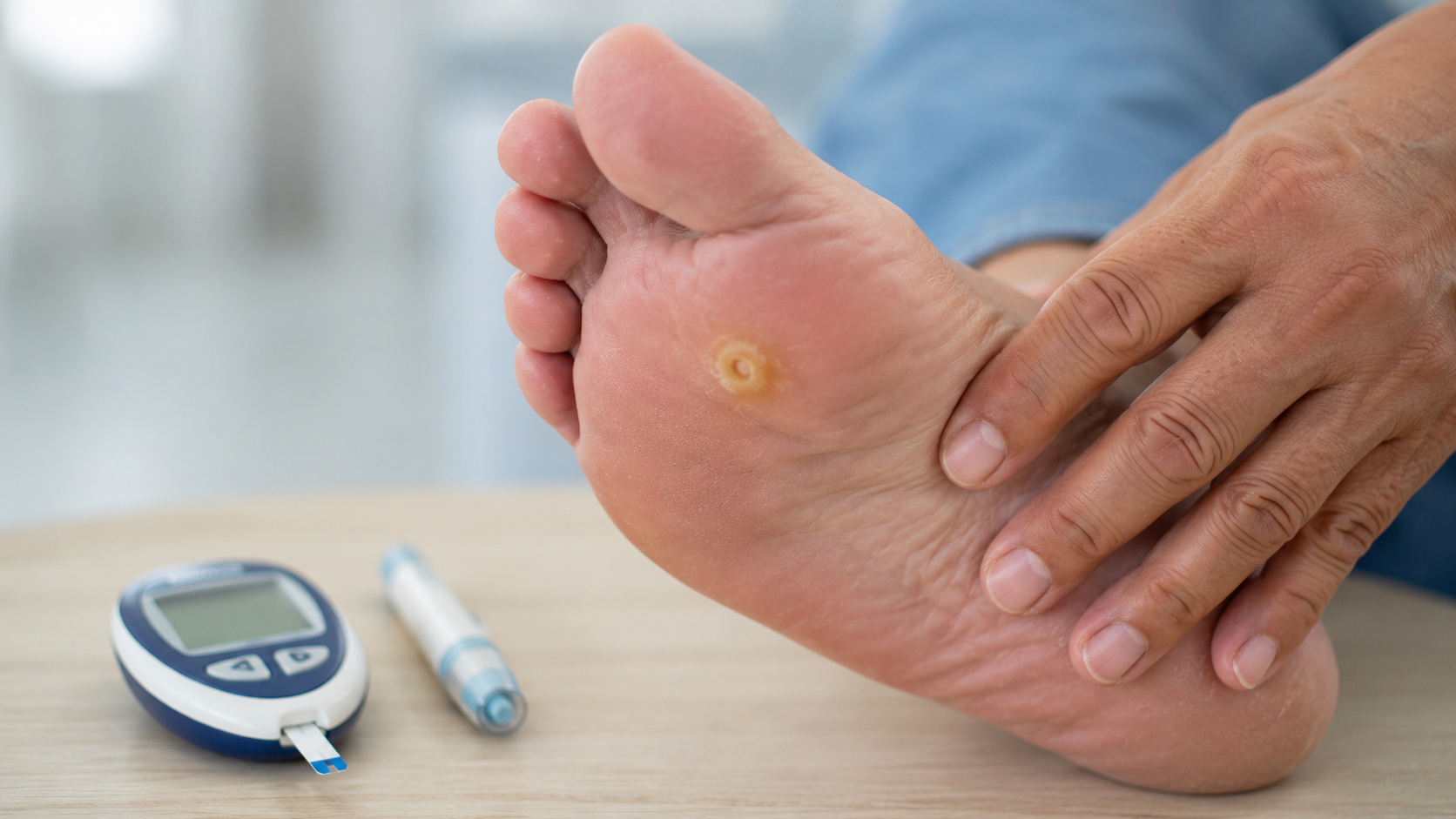
Check your feet daily for redness, swelling, cuts, blisters, or changes in the skin. Daily inspections are especially important because many people with diabetic nerve damage may not realize an injury has occurred. Looking for problems early can help prevent untreated wounds from progressing into ulcers or infections.
Wash your feet daily in warm water and dry them thoroughly. Apply lotion if your feet become dry, but avoid placing lotion between the toes where excess moisture can cause problems. Wear shoes that fit correctly and replace worn footwear when needed. Before putting on your shoes, check the inside for debris, rough seams, or sharp edges that could irritate the skin. These simple habits can help protect healthy feet and lower the risk of ulcers and infection.
When To See a Foot and Ankle Doctor
Schedule an evaluation if you notice corns or calluses that continue to return, become painful, show signs of infection, or do not improve with proper footwear. You should also seek care if you develop redness, drainage, open wounds, changes in skin color, or any area that appears to be breaking down. Reduced blood flow can hinder healing and increase the likelihood of severe infections. Early treatment is the most reliable way to prevent ulcers, infection, and in the most serious cases, amputation.
Protect Your Feet Before Small Problems Become Bigger Ones
Corns may seem like a minor inconvenience, but for people with diabetes they deserve prompt attention. A small area of thickened skin can sometimes hide more serious problems beneath the surface, particularly when nerve damage or poor circulation is present.
Early evaluation, proper footwear, routine foot care, and regular monitoring all significantly reduce that risk. If you have concerns about corns, calluses, or any diabetic foot issue, a foot and ankle specialist can help you protect your mobility, avoid complications, and keep your feet healthy for years to come, and you can contact the Wisconsin Foot & Ankle Clinic to schedule an evaluation.


