

If you're dealing with a foot or ankle injury that just won't heal, focused shockwave therapy might be the treatment your doctor mentions next. It's the technology behind the shockwave care many podiatrists use for stubborn pain in the heel, arch, or Achilles, and it works differently than the shockwave therapy you may have read …


If you’re dealing with a foot or ankle injury that just won’t heal, focused shockwave therapy might be the treatment your doctor mentions next. It’s the technology behind the shockwave care many podiatrists use for stubborn pain in the heel, arch, or Achilles, and it works differently than the shockwave therapy you may have read about elsewhere. Knowing what ‘focused’ actually means takes the guesswork out of that first appointment.
At Wisconsin Foot & Ankle Clinic, we use focused shockwave therapy through our StemWave® program to treat chronic foot and ankle pain without surgery, incisions, or a long recovery. This article breaks down what focused shockwave therapy actually is, how it’s different from radial shockwave therapy, which conditions respond best to it, and what a typical session looks like.
What Is Focused Shockwave Therapy?
Focused shockwave therapy is a non invasive treatment that uses high energy acoustic waves to deliver a concentrated burst of mechanical energy to a specific point deep inside the tissue. Instead of spreading that energy across a wide area, a focused shockwave device channels it to a single, well-defined target, almost like a magnifying glass focusing sunlight onto one spot. That precision is what gives this shock wave therapy its name, and it’s why focused shockwaves are often chosen over other options for treating chronic pain that hasn’t responded to anything else.
The waves create a mild, controlled disruption in the treated area that prompts the body’s own repair response. Blood flow increases, new blood vessels begin to form, and the cells responsible for tissue repair become more active. For patients dealing with a stubborn injury that hasn’t responded to rest or physical therapy, that biological nudge from focused shockwaves can bring real pain relief and better long-term healing.
How Focused Shockwave Differs From Radial Shockwave Therapy
Shock wave therapy comes in two main forms: focused and radial. Radial shockwave therapy uses radial pressure waves that scatter outward from the applicator, delivering maximum intensity right at the skin’s surface before dispersing as they travel deeper into the body. That makes radial shockwave better suited for treating superficial soft tissue and broad areas of muscle pain, but it isn’t always the right choice for a deeper problem.
Focused shockwaves work the opposite way: a radial shockwave stays concentrated near the surface, while a focused shockwave reaches deeper, at an adjustable depth chosen based on where the problem actually is. This gives a foot and ankle specialist the ability to reach a specific ligament, tendon, or bone structure with more precision, which is especially useful for conditions like plantar fasciitis, where the plantar fascia sits just deep enough that surface level energy alone often isn’t enough.
Why We Use Focused Shockwave Therapy at Wisconsin Foot & Ankle Clinic
Our StemWave® program uses focused shockwave technology because of that targeting ability. Foot and ankle conditions are rarely surface level. Whether we’re treating a heel spur, an inflamed tendon, or a stress fracture that’s slow to heal, being able to direct focused shockwaves to the exact depth and treatment area involved gives patients a more precise treatment than a broader radial approach can offer.
How Focused Shockwave Therapy Works
Every focused shockwave therapy session relies on the same basic physics: short, high energy acoustic pulses travel through the skin and soft tissue until they reach their target depth, where the energy is released. That release is what creates the therapeutic effect, and it’s the reason focused shockwaves are used to treat such a wide range of chronic musculoskeletal problems.
The Mechanism Behind the Waves
When focused shockwaves hit the treated area, they create a mechanical stimulus that the body interprets as mild tissue stress. This kicks off several helpful biological responses at once. Blood vessels dilate and multiply in the area, blood flow and oxygen delivery improve, and the body ramps up its production of growth factors and collagen synthesis needed for tissue repair.
These acoustic waves pass through the skin and release their energy at the target depth, where the body’s healing response takes over. Stubborn inflammation starts to settle as that response kicks in. Nerve irritation in the area often calms down as well, which is part of why many patients notice real pain relief within just a few sessions.
This tissue response tends to build over the course of treatment rather than happening all at once. That’s why focused shockwave therapy is typically delivered as a series of sessions rather than a single visit, with each session building on the pain reduction and healing from the last.
Depth and Frequency
One advantage of focused shockwave therapy is that penetration depth and intensity can both be adjusted to match the individual patient and condition. A shallow, sensitive area might call for lower intensity, while a deeper structure, like a stress fracture in a metatarsal bone, may need focused shockwaves to travel further before releasing their energy. Because the energy stays concentrated instead of scattering, focused shockwaves can reach the highest energy density right at the target instead of losing power along the way.
Providers can also fine-tune the frequency range of the pulses, since acoustic waves delivered at a faster rate feel different from a slower setting. This adjustability is part of what separates a modern shockwave therapy machine from older, more generic devices, and it’s worth asking your provider what shockwave therapy machine they use before starting treatment.
Conditions and Indications for Focused Shockwave Therapy
Focused shockwave therapy is highly effective for a range of chronic musculoskeletal conditions in the foot and ankle, particularly ones that involve deeper tissue, bone, or tendon structures. Because focused shockwaves can be aimed precisely, providers use them across a surprisingly broad set of indications, not just one or two.
Plantar Fasciitis and Heel Pain
Plantar fasciitis is one of the most common reasons patients are referred for focused shockwave therapy. Persistent inflammation of the plantar fascia, and the heel spur that sometimes develops alongside it, often responds well once more conservative treatment options like stretching, orthotics, or anti-inflammatory medication have been tried without lasting results. Focused shockwaves target the inflamed tissue directly, helping reduce inflammation and calm the chronic pain that comes with it.
Chronic Tendinopathies
Chronic tendinopathies, including Achilles tendinopathy and issues affecting the rotator cuff or the tendons around the elbow like lateral epicondylitis, are another strong fit for this treatment. These conditions tend to involve tissue that has stopped healing on its own, and focused shockwaves are commonly used to treat and restart that repair process. Calcific tendinitis in the shoulder is a related indication where focused shockwaves are often used to help break down calcium buildup and ease shoulder pain, even though the shoulder itself sits outside the foot and ankle.
Stress Fractures and Delayed Bone Healing
Focused shockwave therapy has also shown real promise for stress fractures and cases of delayed bone healing or bone nonunion, where a fracture isn’t knitting back together as expected. The precise penetration depth makes it possible to treat the bone directly rather than the surrounding soft tissue, which is part of why focused shockwaves are increasingly used alongside more invasive procedures.
Muscle Pain and Athletic Recovery
Focused shockwaves aren’t only used on tendons and bone. Many providers also use the device to treat chronic muscle pain and tightness, especially in athletes who put repetitive stress on the muscles of the lower leg and foot. Treating tight calf muscles or overworked muscles in the arch with high energy pulses can sometimes resolve pain that would otherwise keep coming back, and providers adjust intensity based on how those muscles respond.
Because focused shockwaves can be aimed at a specific depth anywhere in the body, the indications now range from muscles and tendons to bone. If your pain involves muscles that stay tight no matter how much you stretch, it’s worth asking your doctor whether focused shockwave therapy could help.
Other Musculoskeletal Conditions
Beyond these, focused shockwave therapy is used to treat a variety of other musculoskeletal conditions, including plantar fasciopathy and general chronic pain in the joints that hasn’t improved with rest or standard treatment. Providers continue to find new indications for focused shockwaves as more research on treating chronic pain with this technology becomes available.
Signs You Might Be a Candidate for Focused Shockwave Therapy
Not every ache in your foot or ankle needs shockwave therapy, but a few patterns tend to point toward it being worth discussing with your podiatrist. Pain that has lingered for more than a few weeks despite rest, stretching, and over the counter medication is one common sign. So is pain that flares up first thing in the morning or after periods of sitting, which is a classic marker of plantar fasciitis.
You might also be a good candidate if you’ve already tried more conservative treatment options and hit a plateau, or if you’re hoping to avoid surgery for a chronic tendon or bone healing issue. Your foot and ankle doctor can help you sort through which of these signs actually apply to your specific situation, and whether focused shockwaves are likely to help with your particular type of pain.
How We Determine If Focused Shockwave Therapy Is Right for You
Before recommending focused shockwave therapy, we start with a thorough evaluation of the affected area, including your symptoms, how long you’ve had them, and what treatments you’ve already tried. Depending on the condition, this might include a physical exam of the treatment area, a review of your walking pattern, or imaging to confirm exactly what’s going on beneath the surface.
That evaluation matters because focused shockwave therapy works best when it’s aimed at a clearly identified problem. Once we’ve confirmed the diagnosis and ruled out any contraindications, we can talk through whether focused shockwave therapy fits into your treatment plan, and how the device and session schedule would be tailored to your body and your specific condition.
What to Expect During a Focused Shockwave Therapy Session
Before Your Treatment
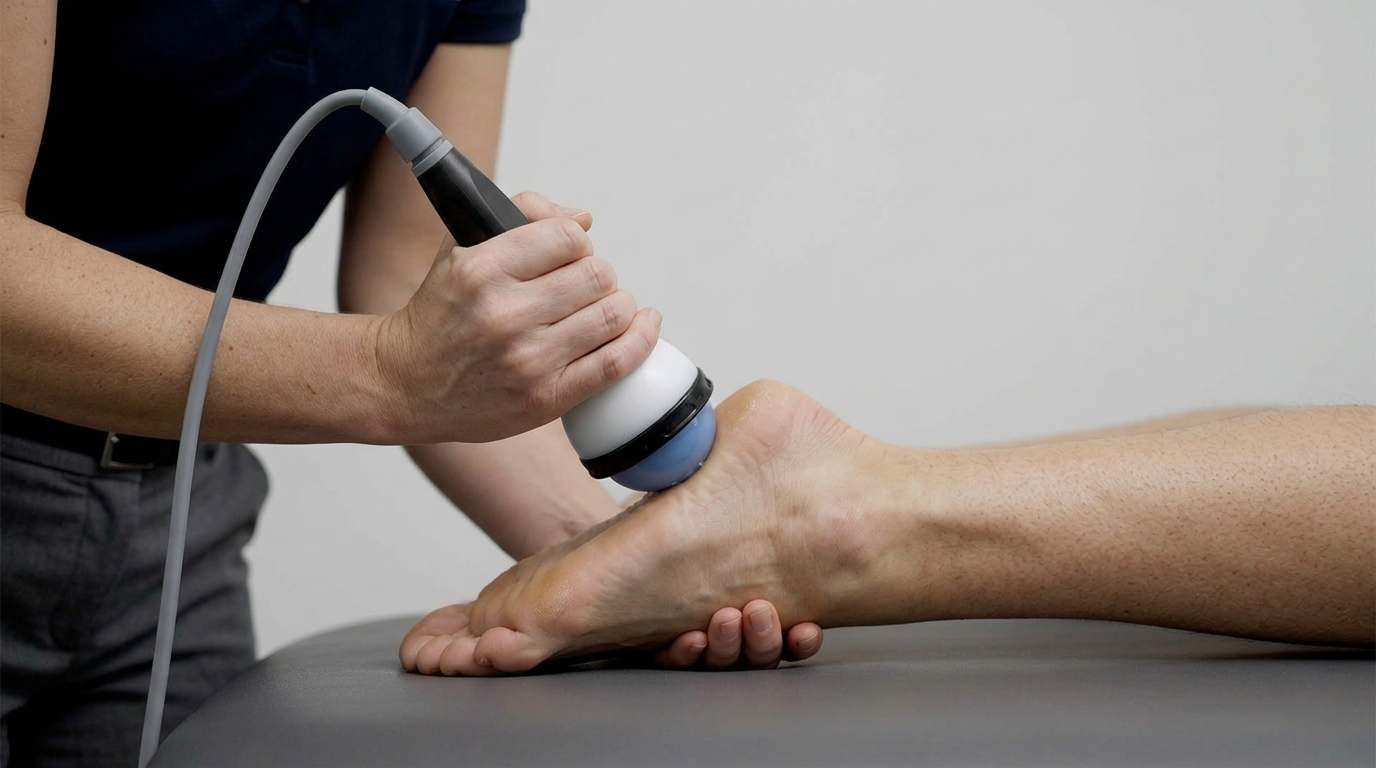
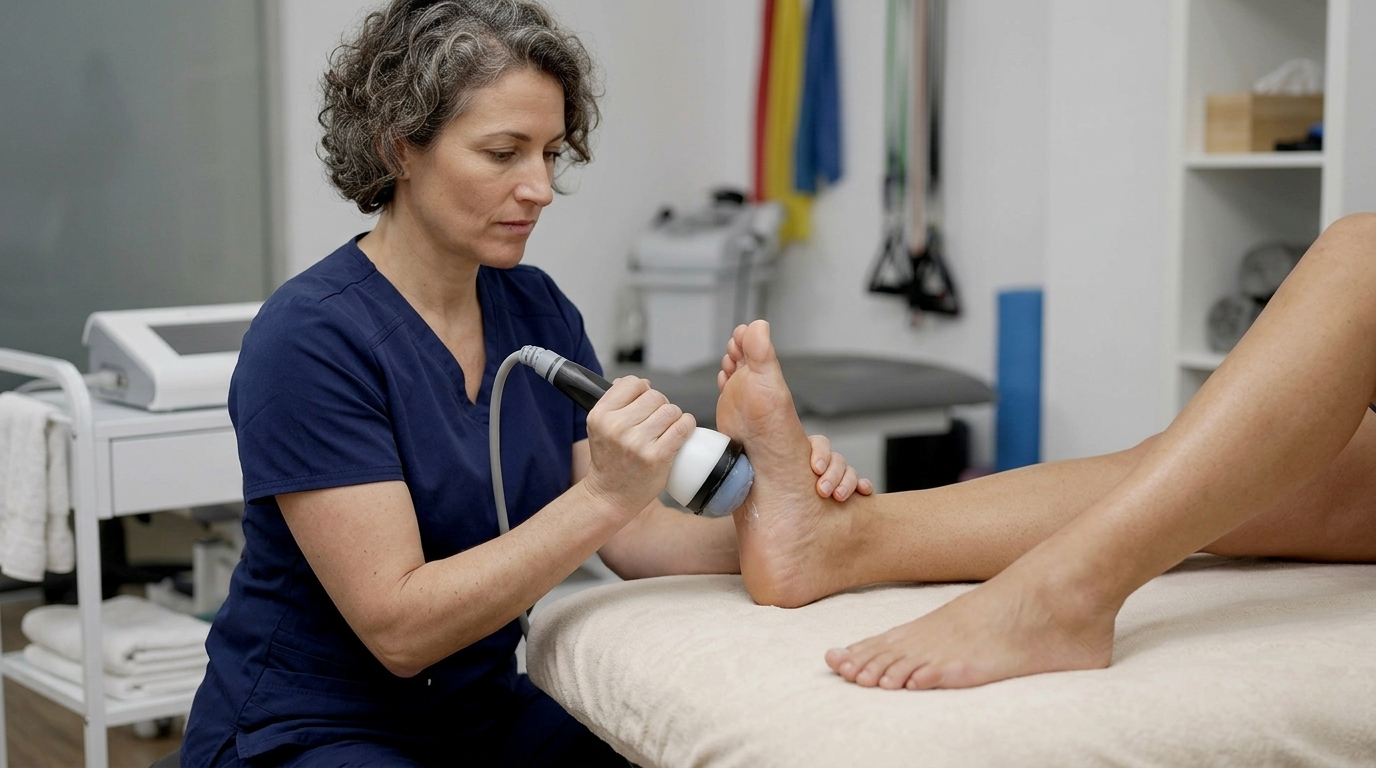
Your provider will apply a small amount of gel to the treatment area to help focused shockwaves transmit efficiently through the skin. No local anesthesia is needed for most patients, since some sensation during the procedure actually helps guide the intensity settings.
During the Procedure
A handheld device delivers focused shockwaves directly to the treated area. Most patients describe the sensation as a firm tapping or pressure rather than sharp pain, and the intensity can be adjusted in real time based on how you’re tolerating the procedure. A typical session with the device lasts somewhere between 10 and 20 minutes, and many patients say it’s more manageable than expected.
After Treatment and Recovery
This is a non invasive procedure with little downtime. Some mild redness or soreness in the application site is common and usually resolves within a day or two. Most people are back to their normal daily activities the same day, which is part of what makes focused shockwave therapy such an appealing non invasive alternative to surgery for chronic pain, and a genuinely different experience than a more invasive procedure.
How Many Sessions You’ll Need
Most patients notice improvement within the first three to four visits, and care plans at our clinic typically include eight to twelve sessions, though the exact number of sessions depends on the condition and how your body responds. Treatment results tend to build gradually. Many patients notice meaningful pain reduction over the full course of sessions, with the treatment providing relief that keeps improving as the healing process catches up.
Precautions and Who Should Avoid Focused Shockwave Therapy
Shock wave therapy in general, whether focused or radial, is considered very safe when guided by a qualified provider, and the indications for its use continue to expand as research grows. Even so, focused shockwave therapy isn’t right for everyone.
Common contraindications include pregnancy, active infection in the treatment area, certain blood clotting disorders, and the use of blood thinning medication. Patients with a pacemaker or another implanted device should also talk with their doctor before starting treatment, since the device involves electronic components that can interact with other medical hardware.
This is why that initial evaluation matters so much. Reviewing your health history alongside your specific foot or ankle condition helps make sure focused shockwave therapy is both appropriate and safe before treatment ever begins, and it’s an essential step that shouldn’t be skipped, even when everything looks routine.
When to Talk to a Foot and Ankle Doctor About Focused Shockwave Therapy
If you’ve been dealing with foot or ankle pain for more than a few weeks, especially pain that hasn’t improved with rest, stretching, or basic home care, it’s worth getting evaluated rather than waiting it out. The same goes for pain that’s affecting how you walk, work, or stay active, or a bone injury that seems to be healing more slowly than expected.
A foot and ankle doctor can determine whether focused shockwave therapy, or another conservative treatment option, is the right next step for your specific condition, so you’re not left guessing about what’s actually going on with your body.
Focused shockwave therapy has become one of the more reliable non invasive options for chronic foot and ankle pain that hasn’t responded to rest or basic conservative treatment. Because the energy is delivered with precision rather than spread across the surface, focused shockwaves are often able to reach the exact structure that’s causing your pain, whether that’s the plantar fascia, a stubborn tendon, or bone that’s healing more slowly than it should. For many patients, that makes it a genuine non invasive alternative worth exploring before considering surgery, and one that can offer lasting pain relief rather than a short-term fix.
If ongoing pain has been holding you back, it’s worth having a conversation with your foot and ankle doctor about whether focused shockwave therapy could help. At Wisconsin Foot & Ankle Clinic, our team will evaluate your foot or ankle, confirm whether focused shockwave therapy fits your condition, and walk you through what StemWave® treatment would look like. Reach out to our team to schedule an evaluation and take the first step toward getting back to the activities you’ve been missing.


