

Wisconsin Foot & Ankle Clinic offers expert diagnosis and personalized treatment for a wide range of foot and ankle conditions, including injuries, chronic pain, and diabetic foot concerns. Same-week appointments are often available, and urgent concerns may be accommodated quickly when possible. Who We Help and How to Get Seen Quickly Wisconsin Foot & Ankle …


Wisconsin Foot & Ankle Clinic offers expert diagnosis and personalized treatment for a wide range of foot and ankle conditions, including injuries, chronic pain, and diabetic foot concerns. Same-week appointments are often available, and urgent concerns may be accommodated quickly when possible.
Who We Help and How to Get Seen Quickly
Wisconsin Foot & Ankle Clinic in Brookfield, WI provides expert diagnosis and treatment for foot and ankle pain affecting adults, athletes, and people managing diabetes. Whether you’re dealing with chronic heel pain that makes mornings difficult, an ankle injury from a weekend hike, or concerns about nerve symptoms in your feet, the clinic offers comprehensive care tailored to your specific situation.
Foot pain and ankle pain are common problems affecting millions of people worldwide, with conditions like plantar fasciitis causing sharp pain in the arch or heel in about 10% of the population at some point in their lives. Other common issues include Achilles tendonitis, arthritis, bunions, hammertoes, flat feet, and nerve-related conditions such as Morton’s neuroma and neuropathy. Structural deformities like flat feet and high arch deformities can lead to chronic pain and instability, underscoring the need for specialized care.
For urgent issues like new ankle sprains, sudden foot pain, or possible fractures, the clinic often provides same-week appointments and may accommodate urgent concerns quickly when possible. This quick access matters because early evaluation can prevent further damage and speed recovery time.
As an independent practice, not part of a large hospital system, Wisconsin Foot & Ankle Clinic maintains the flexibility to create patient-first treatment plans. This independence means your care isn’t dictated by system-wide protocols, but by what actually works best for your condition, lifestyle, and goals.
Many foot and ankle problems improve significantly with the right combination of conservative care and, when necessary, advanced surgery. From custom orthotics designed to support and correct foot misalignments and reduce pain for some people and improve function, but results vary by condition and fit, to targeted injections, physical therapy to improve strength, flexibility, and balance, and complex reconstruction and ankle replacement, the clinic covers the full spectrum of treatment options under one roof.
Choosing a facility with on-site X-rays or MRI can provide immediate diagnosis and save time. Wisconsin Foot & Ankle Clinic offers on-site X-rays and ultrasound, speeding up diagnosis and treatment so you can start recovery sooner.
When selecting a foot and ankle doctor, it’s important to confirm the provider is in-network to minimize out-of-pocket costs. Look for certification from the American Board of Podiatric Medicine (ABPM) or Foot & Ankle Surgery (ABFAS), and assess the doctor’s communication style during your first visit. Checking online reviews and asking for referrals from trusted sources can help you find a specialist who emphasizes patient experience and satisfaction. Many clinics, including Wisconsin Foot & Ankle Clinic, are staffed by a fellowship-trained foot & ankle surgeon who is a member of professional institutions and uses a range of diagnostic tools to accurately assess your condition. Patients are encouraged to reach out via phone or online forms to schedule appointments conveniently.
If you’re in Brookfield or the greater Milwaukee area and experiencing persistent or worsening foot and ankle pain, schedule an appointment today to get answers and start moving toward relief.

Meet Your Foot and Ankle Surgeon: Dr. Donald T. McDonald
Dr. Donald T. McDonald founded Wisconsin Foot & Ankle Clinic with a clear mission: to provide Brookfield-area patients with access to advanced foot and ankle care delivered in a personal, patient-centered way. As a fellowship-trained foot and ankle surgeon, he brings specialized expertise to both routine cases and the most challenging reconstructive procedures.
Dr. McDonald’s training path prepared him thoroughly for complex cases. After completing podiatric medical school, he finished his surgical residency at Ascension St. John Hospital in Detroit. He then pursued an additional year of fellowship training with American Health Network in Indianapolis, focusing intensively on complex reconstruction, revision surgery, trauma management, and ankle joint replacement. This advanced training means patients facing severe arthritis, failed prior surgeries, or significant deformities have access to a doctor equipped to handle these challenges.
His clinical interests include advanced reconstruction for patients with severe deformities or non-healing injuries, ankle fractures requiring precise surgical repair, ligament injuries causing chronic instability, and total ankle replacement for end-stage arthritis. These areas represent some of the most demanding problems in foot and ankle medicine.
What sets Dr. McDonald apart is his personal connection to active living. As a former competitive runner who remains an avid athlete, he understands firsthand how foot and ankle injuries disrupt the activities that matter most to patients. This background shapes his approach: he focuses on functional movement and helping people return to specific goals, whether that’s walking the dog pain free, standing comfortably through a work shift, or running a 5K again.
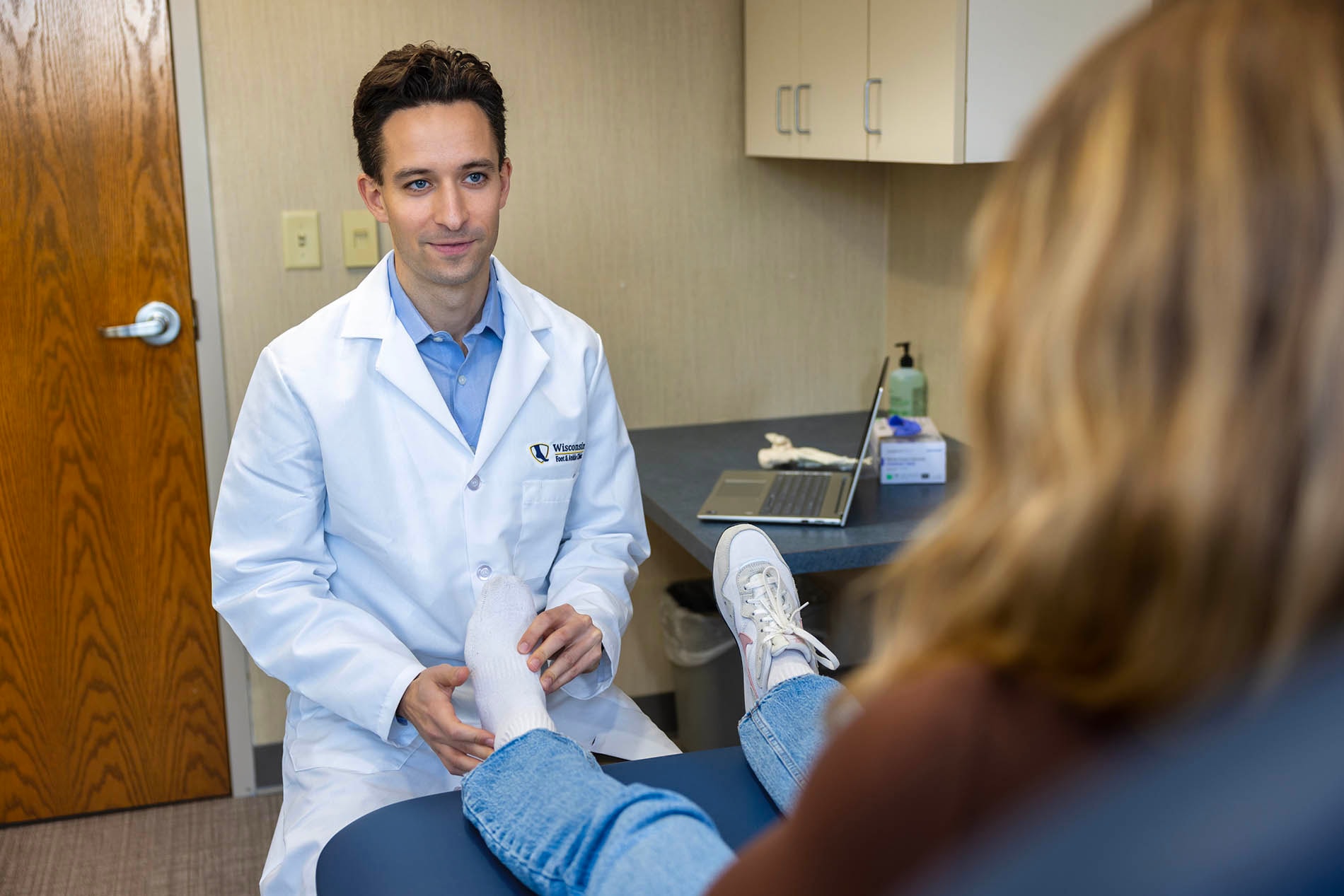
In the exam room, Dr. McDonald emphasizes listening carefully and explaining diagnoses in plain language. He uses models and images to show patients exactly what’s happening in their foot or ankle, ensuring everyone leaves with a clear understanding of their condition and options.
Why Choose a Fellowship-Trained Foot and Ankle Doctor
Fellowship training represents an extra year of focused, advanced surgical education beyond the standard three-year residency. During this year, a surgeon works intensively on complex cases under the guidance of leading experts, building skills that residency alone doesn’t fully develop.
For patients facing severe arthritis, significant deformities, revision surgery after a prior procedure that didn’t heal correctly, or advanced trauma, this additional training matters significantly. Fellowship-trained surgeons have seen more complex cases and performed more intricate procedures during their training.
Many patients will still receive non-surgical treatment as their primary care path and that’s often the right approach. However, when surgery becomes necessary, knowing your surgeon has fellowship-level training provides reassurance that they’re prepared for whatever complexity your case presents.
Research in orthopedic and podiatric surgery suggests that in complex cases, experience and case type can matter, and outcomes depend on many patient and surgical factors. This is particularly relevant for challenging operations like ankle replacement or revision surgery where technical precision directly impacts results.
Common Foot and Ankle Conditions We Treat
Structural Conditions
-
Bunions: Big toe deformity causing pain, shoe irritation, and difficulty finding comfortable footwear.
-
Hammertoes: Bent toes that rub in shoes and form corns or calluses.
-
Painful Flat Feet: Arch collapse causing fatigue, ankle pain, or strain extending to knees and back.
-
Foot Arthritis: Stiffness and swelling in the midfoot, big toe, or other joints, often worse in the morning or after activity.
-
Ankle Deformities: Structural abnormalities affecting ankle alignment and function.
Tendon and Soft Tissue Conditions
-
Achilles Tendonitis: Pain at the back of the heel or ankle, common in runners and walkers.
-
Plantar Fasciitis: Heel pain that’s often sharp with first steps in the morning.
-
Tendon Injuries: Partial tears, inflammation, or degeneration affecting various foot and ankle tendons.
-
Heel Spurs: Bony growths causing heel pain and inflammation.
Injuries and Fractures
-
Sports Injuries: Sprains, tendonitis, stress fractures, and overuse pain from running, court sports, or walking programs.
-
Ankle Sprains: Rolled ankles with swelling, bruising, and instability approximately 2 million occur annually in the US.
-
Ankle Fractures: Broken bones around the ankle joint from falls, sports, or accidents.
-
Foot Fractures: Stress fractures and acute breaks in toes, midfoot, or heel bone.
Diabetes and Medical Risk Conditions
-
Diabetic Foot Problems: Includes nerve damage, ulcers, infections, and wound care essential to prevent complications.
-
Post-Traumatic and Post-Surgical Pain: Lingering pain or deformity after previous injuries or operations.
-
Arthritis Management: Chronic joint inflammation and degeneration requiring ongoing care.
Nerve Pain Conditions
-
Nerve Pain: Burning, tingling, or numbness in the feet possibly related to nerve entrapment or peripheral neuropathy.
-
Morton’s Neuroma: Thickening of tissue around nerves between toes causing pain.
-
Peripheral Neuropathy: Nerve damage causing sensory changes and discomfort.
Advanced modalities such as MLS laser therapy, focused shockwave therapy, and regenerative medicine treatments like amnion injections may be considered in select cases, and results vary by condition. These therapies are used cautiously and tailored to individual patient needs, often after conventional treatments have been considered. At Wisconsin Foot & Ankle Clinic, our shockwave treatment uses StemWave® focused wave technology, which concentrates acoustic energy at a targeted depth beneath the skin.
Foot Surgery: Bunion Correction, Hammertoes, and Reconstruction
When conservative treatment fails or a deformity is too advanced, foot surgery may be recommended to address the underlying structural problem. Dr. McDonald performs these procedures with a focus on restoring alignment and function.
Common foot procedures include:
-
Bunion surgery – Procedures to realign the big toe joint, reduce pain, and improve shoe fit. Recovery varies by procedure and patient, and your surgeon will give a timeline based on your case.
-
Hammertoe correction – Straightening toes fixed in a bent position, sometimes using small implants or pins to maintain alignment during healing.
-
Forefoot and midfoot reconstruction – Correcting complex deformities or arthritis to improve alignment and reduce pain in the ball of the foot or arch.
-
Fracture repair – Surgical fixation of broken bones in metatarsals, toes, or other foot structures when proper healing requires stabilization.
Each surgery is planned around the patient’s overall health, activity level, and specific goals. Dr. McDonald discusses risks, benefits, and realistic recovery timelines before any procedure.
Surgery for bunions is typically considered when pain significantly limits daily activities and conservative measures have been tried for several months without adequate relief.
Ankle Surgery and Advanced Procedures (Including Ankle Replacement)
The ankle joint bears tremendous load with every step, and severe injuries or advanced arthritis sometimes require surgical solutions. Dr. McDonald’s fellowship training in reconstruction and ankle replacement positions him to guide patients through these complex decisions.
Major ankle procedures offered:
|
Procedure |
When It’s Considered |
|---|---|
|
Ankle fracture repair |
Realigning and stabilizing broken bones with plates and screws when displacement requires surgical correction |
|
Ligament reconstruction |
Restoring stability after repeated ankle sprains or chronic ankle instability that hasn’t responded to bracing and therapy |
|
Cartilage and joint procedures |
Addressing focal cartilage injuries or early arthritis with joint-preserving techniques when suitable |
Ankle Replacement vs Fusion
Ankle replacement and ankle fusion are two surgical options for managing severe ankle arthritis or deformity. Ankle fusion involves permanently joining the bones of the ankle joint to eliminate motion and reduce pain, but it can limit mobility and affect gait. In contrast, ankle replacement may be preferred for patients seeking to preserve mobility, as it preserves joint motion by substituting the damaged joint with an artificial implant, aiming to maintain more natural movement. According to registry data, modern ankle implants demonstrate around 80% survivorship at 10 years, depending on patient selection and implant type. The choice between these procedures depends on individual patient factors, lifestyle, and surgeon expertise.
The clinic provides detailed preoperative counseling and coordinates postoperative care and rehabilitation to support recovery. Patients know exactly what to expect before, during, and after surgery.
Ankle arthroscopy is a minimally invasive procedure used to diagnose and treat various conditions within the ankle joint, often resulting in quicker recovery times and less scarring.
How a Foot and Ankle Doctor Diagnoses Your Pain
An accurate diagnosis is the foundation of effective treatment. Many foot and ankle conditions share similar symptoms. Heel pain, for example, might stem from plantar fasciitis, a stress fracture, or nerve entrapment but each requires a different approach.
The typical evaluation process at Wisconsin Foot & Ankle Clinic includes:
-
Medical history – Detailed questions about symptom onset, prior injuries, activities, medical conditions (like diabetes or arthritis), and previous treatments
-
Physical exam – Checking alignment, joint motion, tendon strength, gait patterns, and areas of tenderness or swelling
-
Imaging – On-site or referred X-rays to evaluate bones and joint spaces; advanced imaging such as MRI or CT ordered when soft tissues or complex injuries need further evaluation
-
Additional testing – Nerve studies or vascular assessments if circulation or neuropathy is a concern
After completing the evaluation, the doctor discusses findings in clear language, often using models or images to show exactly what’s happening in your foot or ankle. This educational approach helps patients understand their condition and participate meaningfully in treatment decisions.
Clinical examination combined with appropriate imaging is essential for distinguishing between conditions like severe ankle sprains and fractures, which may present similarly but require very different management.
This systematic approach helps ensure you receive the right treatment for your specific problem not just a generic solution.
What to Bring to Your First Visit
To help your appointment go smoothly, bring:
-
The shoes you wear most often
-
A list of current medications
-
A timeline of your symptoms and any prior treatments
-
Any previous imaging studies or reports, if available
When to See a Foot and Ankle Doctor in Brookfield
Many people delay care, hoping pain will resolve on its own. While some minor issues do improve with rest, waiting too long on a significant problem can lead to further damage, prolonged recovery, and sometimes permanent changes to the joints or soft tissues.
Schedule an appointment if you experience:
-
Foot or ankle pain lasting more than 1-2 weeks despite rest and basic home care
-
Pain that returns whenever you walk, run, or stand for work
-
Swelling, stiffness, or deformity that’s getting worse over time
-
Recurrent ankle sprains or a feeling that your ankle “gives out”
-
Numbness, tingling, burning, or loss of sensation in your feet especially important for people with diabetes
-
Changes in skin color, temperature, or wounds that are slow to heal
Seek urgent or emergency care for:
-
Inability to bear weight immediately after an injury
-
Obvious deformity after a fall or accident (bone appears displaced or angled)
-
Signs of infection: spreading redness, warmth, pus, or fever around a wound or toenail
For severe trauma or symptoms suggesting serious infection, call 911 or go to the emergency room. For other concerning symptoms, contact Wisconsin Foot & Ankle Clinic promptly to arrange evaluation.
This article is for educational purposes and is not a substitute for an in-person medical assessment. If you’re unsure whether your symptoms require urgent attention, call the clinic or your primary care provider for guidance.
Schedule an Appointment with Wisconsin Foot & Ankle Clinic
If you’re living with foot or ankle pain in Brookfield or the greater Milwaukee area, relief and answers are available close to home. Taking the first step toward a clear diagnosis and treatment plan can make the difference between ongoing discomfort and getting back to the activities you enjoy.
Clinic Location:
Wisconsin Foot & Ankle Clinic
19475 W. North Ave Ste 302
Brookfield, WI 53045
The clinic is conveniently accessible from surrounding communities including Wauwatosa, Waukesha, New Berlin, and Menomonee Falls via major local roads.
New patients and existing patients alike are welcome to schedule appointments for:
-
Chronic pain from conditions like plantar fasciitis, bunions, or arthritis
-
Sports injuries and overuse problems
-
Diabetic foot concerns and preventive care
-
Questions about advanced options like ankle replacement or reconstruction
-
Second opinions on previous diagnoses or failed treatments
The clinic staff can help you understand insurance coverage, prepare for your first visit, and coordinate any needed imaging or physical therapy referrals. The team works to make the process straightforward from your first call through recovery.
If you’re dealing with persistent foot or ankle pain in the Brookfield area, contact Wisconsin Foot & Ankle Clinic to schedule an appointment and get a personalized treatment plan. Expert care focused on helping you move comfortably again is just one call away.


