

If your heel throbs the moment your foot hits the floor in the morning, you already know how disruptive plantar fasciitis pain can be. That first-step pain can make it hard to get through a workday, a workout, or even a walk to the mailbox, and it tends to circle back after long stretches …


If your heel throbs the moment your foot hits the floor in the morning, you already know how disruptive plantar fasciitis pain can be. That first-step pain can make it hard to get through a workday, a workout, or even a walk to the mailbox, and it tends to circle back after long stretches of sitting or standing. A consistent set of plantar fasciitis stretches, done correctly and often enough, is one of the most effective ways to calm that pain and get your foot moving more comfortably again.
This guide walks through what’s actually happening in your foot when plantar fasciitis flares up, why it develops, and a clear, step-by-step stretching routine you can start using today. We’ll also cover when stretching alone isn’t enough and it’s time to bring in a foot and ankle specialist.
What’s Happening When Your Heel Hurts
Plantar fasciitis involves the plantar fascia, a thick band of tissue that runs along the bottom of your foot, connecting your heel bone to your toes. This band supports your arch and absorbs shock every time your foot strikes the ground. When it gets overloaded, tiny tears develop in the tissue, and the fascia becomes irritated and inflamed.
That inflammation is why the first few steps out of bed hurt the most. Overnight, your foot rests in a relaxed position, which allows the plantar fascia to tighten. The moment you put weight on it again, that tight band gets stretched suddenly, and the pain hits before it has a chance to loosen up.
What Usually Causes Plantar Fasciitis
Tight calf muscles are one of the biggest contributors. Your calf muscles connect to the Achilles tendon, which wraps around your heel and ties directly into the plantar fascia, so tension in your lower leg gets transferred straight to the bottom of your foot.
Being on your feet for long periods, whether from a job that keeps you standing all day or a sudden jump in running or walking distance, puts repeated strain on the fascia. Foot structure plays a role too. Flat feet, high arches, or an uneven walking pattern can all shift extra load onto the arch and heel.
Carrying extra body weight adds pressure with every step, and worn-out or unsupportive shoes can leave your arch without the cushioning it needs. Most people who develop plantar fasciitis have a combination of these factors rather than just one.
Symptoms and Warning Signs to Watch For
The hallmark symptom is a sharp, stabbing sensation under the heel, usually worst with your first steps in the morning or after getting up from sitting for a while. Many people notice the pain eases somewhat as they keep moving, only to return after standing or walking for long periods.
Some people also notice mild swelling near the heel or tenderness when pressing on the bottom of the foot. If the pain is accompanied by numbness, tingling, or pain that radiates into your toes, that can point to a different issue, such as nerve involvement, and is worth mentioning to a specialist rather than assuming it’s routine heel pain.
How Plantar Fasciitis Is Diagnosed
A foot and ankle specialist typically starts with a hands-on exam, checking for tenderness at the specific spot where the plantar fascia attaches to the heel bone and testing how far your ankle and toes can flex. This physical exam, combined with a conversation about when your pain flares and what activities trigger it, is usually enough to confirm plantar fasciitis, in line with current medical guidance on diagnosing and treating plantar fasciitis.
Imaging isn’t always necessary, but an X-ray may be ordered if your doctor wants to rule out a stress fracture or check for a heel spur. Heel spurs are common in people with plantar fasciitis, but they aren’t the actual source of the pain, so finding one doesn’t necessarily change the treatment plan.
Plantar Fasciitis Stretches: A Step-by-Step Routine
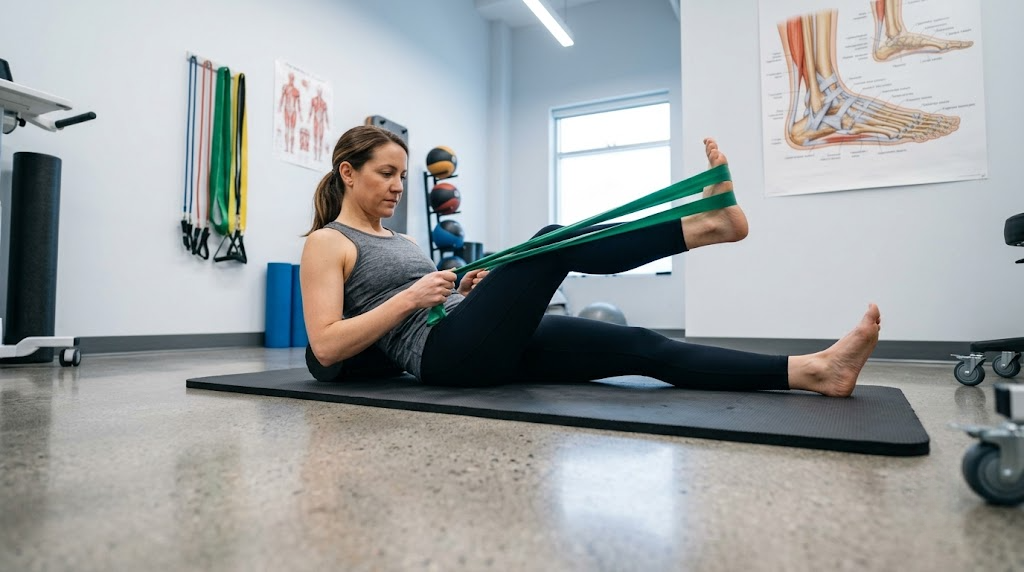
Stretching is considered the most effective first-line treatment for plantar fasciitis because it improves flexibility, lowers tension, and gives the fascia a chance to heal instead of re-tearing with every step. The stretches below target the calf, Achilles tendon, and plantar fascia, and they’re worth doing daily, not just when pain flares.
Calf Stretch
Tight calves are one of the most common drivers of heel pain, so loosening the back of your lower leg takes pressure off the fascia directly.
Stand facing a wall with your hands flat against it. Step one foot back, keeping that back leg straight and your heel flat on the floor, while your front knee bends slightly. Lean into the wall until you feel a stretch in the calf of your back leg, and hold for 20 to 30 seconds. Switch legs and repeat two to three times per side.
Towel Stretch
This one directly targets the plantar fascia and is a staple of physical therapist-guided stretching routines, especially useful first thing in the morning, before that first painful step even happens.
Sit on the floor with your legs extended in front of you. Loop a small towel or a resistance band around the ball of one foot, holding an end in each hand. Keeping your knee straight, gently pull the towel toward you until you feel a stretch along the bottom of your foot and up through your calf. Hold for 15 to 30 seconds, then switch feet.
Frozen Water Bottle Roll
Rolling something cold under your foot combines gentle massage with cold therapy, which can help reduce inflammation in the fascia while also easing tension.
Sit in a chair with a frozen water bottle positioned under the arch of one foot. Gently roll your foot back and forth over the bottle, moving from the ball of your foot to your heel and back again, for one to two minutes. Repeat on the other foot. A tennis ball or golf ball works as a substitute if you don’t have a water bottle handy, though skip the cold if you don’t have access to a freezer.
Toe Curls
Strengthening the small muscles that support your arch helps your foot handle daily load without putting all the strain on the plantar fascia.
Place a small towel flat on the floor and set one foot on top of it. Using only your toes, scrunch the towel toward you, then release. Repeat 10 to 15 times per foot. As this gets easier, you can add a light weight to the far edge of the towel to increase the challenge.
Seated Plantar Fascia Stretch
This stretch reaches the arch of your foot directly and pairs well with the calf and towel stretches above.
Sit in a chair and cross one foot over the opposite knee. With one hand, gently pull your toes back toward your shin until you feel a stretch through the arch of your foot. Hold for 15 to 30 seconds and repeat two to three times per foot.
For best results, aim for at least 10 minutes of stretching a day, split across these exercises, and try to fit in a short session first thing in the morning before you put weight on your foot. Most people notice gradual improvement after several weeks of steady stretching, consistent with podiatrist-recommended stretching guidance, though it can take longer for symptoms to fully resolve. If stretching alone isn’t cutting it, conservative treatment options like custom orthotics, supportive footwear, or a short course of anti-inflammatory medication can work alongside your stretching routine to speed things along.
When to See a Foot and Ankle Doctor

Give a consistent stretching routine a fair try, generally a couple of weeks, before expecting major relief. But there are signs that mean it’s time to schedule a visit rather than keep waiting it out.
If your heel pain hasn’t improved after two to three weeks of regular stretching, or if it’s getting worse instead of better, that’s a signal to have it evaluated. The same goes for pain that’s limiting your ability to walk, stand, exercise, or get through your workday.
Swelling, bruising, numbness, or a sharp pain that feels different from the usual morning stiffness are also reasons to come in sooner rather than later. A foot and ankle specialist can confirm whether plantar fasciitis is really the source of your pain, since conditions like a stress fracture or Achilles tendon irritation can feel similar in the early stages, and build a treatment plan suited to your specific case.
Moving Forward Without the Morning Dread
Heel pain that greets you every morning wears you down, but it’s also one of the more predictable conditions to treat once you know what’s driving it. A steady stretching routine, paired with supportive shoes and a bit of patience, resolves plantar fasciitis for most people without needing anything more advanced.
If you’ve been stretching consistently for a few weeks without much change, or the pain is holding you back from the activities you enjoy, Wisconsin Foot & Ankle Clinic can pinpoint exactly what’s driving your heel pain and build a treatment plan around it. Reach out to our team to schedule a visit and take the next step toward walking without wincing.


