

You catch your toe on the leg of a chair, miss the edge of a doorway, or misjudge a curb, and suddenly you're hopping around holding it. A stubbed toe can bring on some of the sharpest toe pain you'll feel from something so small. That first burst of sharp pain is your body's normal …


You catch your toe on the leg of a chair, miss the edge of a doorway, or misjudge a curb, and suddenly you’re hopping around holding it. A stubbed toe can bring on some of the sharpest toe pain you’ll feel from something so small. That first burst of sharp pain is your body’s normal reaction to sudden trauma, and most of the time it fades within a few minutes. Every so often, though, that same forceful impact hides a broken toe or a torn ligament underneath the bruising.
If you’re dealing with lingering toe pain, swelling, or a toe that just doesn’t look right after an accident like this, here’s how to tell whether it’s a serious injury or something that’ll heal on its own, including what’s actually happening in your toe, what to do about it right away, and when it’s time to have a foot and ankle specialist take a look.
What Happens When You Stub Your Toe
A stubbed toe happens when it strikes a hard surface or object with enough force to jam the joint or bruise the tissue underneath. Your toes are packed with nerve endings but have very little fat or padding to cushion them, which is exactly why even a minor bump can trigger such intense pain in a split second, according to Cleveland Clinic.
The initial jolt usually eases as swelling goes down. Gently massaging the area right after the injury can help by increasing blood flow, which takes some of the edge off.
Because the toe bones sit so close to the skin, the same forceful impact that causes an ordinary stubbed toe can also crack a bone, tear a ligament, or damage the nail underneath. Most often it’s the big toe or the pinky toe that takes the brunt of it, though any of your other toes can be affected too.
Common Causes of a Stubbed Toe
Distracted Walking and Missteps
Most stubbed toes happen during ordinary moments: walking through a dark hallway, rushing to answer the door, or misjudging a step. A quick, careless movement is often all it takes to catch a toe on something solid.
Furniture, Doorways, and Cluttered Floors
Coffee tables, bed frames, and doorframes are common culprits, especially in tight spaces. Toys, shoes, and other clutter left on the floor create the same risk, particularly at night when visibility is low.
Sports Impacts and Dropped Objects
A sports injury or a heavy object dropped straight onto the toe causes the same kind of trauma as an everyday stub, just with more force behind it. That extra force is often what tips ordinary toe pain into a genuine fractured toe, so any sports injury involving the toes deserves the same evaluation as a hard fall.
Barefoot Walking and Summer Footwear
Warmer months bring more barefoot walking, sandals, and time spent around pool decks, and all three raise the odds of stubbing your toe. Without a shoe to absorb the impact, you take the full force of hitting a step, a lounge chair, or the edge of a pool.
Symptoms and Warning Signs

What a Typical Stubbed Toe Feels Like
The toe pain from stubbing your toe is usually sharp and sudden, and it can radiate through the rest of your foot for a few minutes afterward. Swelling and tenderness are common, and putting weight on the toe may feel uncomfortable for a day or two. Most people are back to pain free walking within a few days.
Even the most severe toe pain from a stub tends to start easing within a day, which is one of the more reassuring signs that you’re not dealing with a broken bone.
Bruise, Sprain, or Broken Toe? How to Tell Them Apart
If your toe still hurts several hours after stubbing your toe, or the toe pain gets worse instead of better, that’s one of the clearest signs of a more serious injury than a simple bruise. A ligament sprain involves the tissue around the toe joint and tends to bring swelling pain that lingers longer than a bruise would; ongoing swelling pain past the first couple of days is one of the clearest cues to get it looked at.
A broken toe often looks different: a visible deformity, a toe that points in an odd direction, or trouble bending it at all. Pain that won’t ease with rest and swelling that keeps building, rather than settling down, are the two clearest signs you’re looking at a fracture or a significant sprain, not a routine bump.
If you’re feeling the most severe toe pain of your life from something that started as a simple stub, that intensity alone doesn’t automatically mean it’s broken, but it’s a good enough reason to have it checked. A stubbed toe rarely turns into a serious injury, but it happens often enough to take seriously. Toe injuries vary widely, from a five-minute ache to a fracture needing weeks of care, and because injuries vary so much, self-diagnosing isn’t always reliable.
Nail Injuries and Bleeding Under the Nail
A hard enough impact can cause bleeding under the toenail, which shows up as a dark red or purple spot beneath the nail bed. This kind of injury is often extremely painful because of the pressure that builds up as blood pools under the nail.
If the nail itself is cut or bleeding, gently cleaning the area with warm water, applying an antibiotic cream, and keeping it covered can help lower the odds of infection while it heals. In more painful cases, a doctor can relieve the pressure through nail trephination, a quick in-office procedure that drains the blood trapped under the nail. Right after you’ve stubbed your toe, resist the urge to keep walking on it as if nothing happened, since that can make a nail injury worse.
How a Stubbed Toe Is Diagnosed
A foot and ankle specialist will typically start with simple visual inspections and a few sensation tests to see how the area responds to light touch and movement. They’ll also ask about your prior medical history, any family medical history relevant to bone health, and any recent physical traumatic events tied to the injury, since that context helps narrow down what’s actually going on.
An early, accurate diagnosis matters because toe pain doesn’t always come from a fresh injury alone. Your medical and family history helps a specialist rule out other causes, so treatment addresses what’s actually going on rather than assuming it’s a simple bump.
If the exam suggests something more than a bruise, an X-ray is the most reliable way to rule out broken bones, and ignoring broken bones in the toe can lead to problems down the road. In select cases involving suspected ligament or soft tissue damage, mri scans may be recommended for a clearer picture, and newer mri scans paired with better treatment technologies make that process faster and more comfortable than it used to be. Either way, the goal is the same: figure out exactly what’s causing the pain so the right care can start right away. For most patients, though, simple visual inspections are enough to confirm there’s no deformity before deciding on next steps, and these sensation tests matter even when the injury looks minor, since nerve involvement isn’t always obvious right away.
Treatment Options for a Stubbed Toe
First Aid and the RICE Method
Most stubbed toes respond well to simple home remedies: rest, ice, compression, and elevation. Apply ice during the first 24 hours to help reduce swelling, and keep an ice pack handy for any swelling that returns after activity. Elevating your foot encourages blood flow back toward the rest of your body instead of pooling in the injured area. Over-the-counter pain relievers like ibuprofen can also take the edge off during the first day or two.
Buddy Taping and Supportive Footwear
Buddy taping, wrapping the injured toe to the one next to it for support, can ease pain and protect it while it heals. Wearing roomy shoes, or sticking to sandals for a few days, keeps pressure off the area until the swelling comes down; shoe inserts can help too if the area stays tender longer than expected.
When More Advanced Care Is Needed
A toe fracture or a more serious ligament injury sometimes calls for a stiff-soled shoe or walking boot to keep it stable while it heals. Severe fractures, dislocations, or injuries that don’t improve with conservative therapy may need more advanced methods, including splinting or, in rare cases, surgical repair; modern treatment technologies have made even those more advanced methods far less disruptive to daily life than they once were.
A fractured toe typically needs six to eight weeks of healing before normal shoes feel comfortable again, per orthopedic recovery guidelines, and it’s common for mild soreness or swelling to linger for several weeks after that.
Preventing a Repeat Stubbed Toe
Choosing to wear shoes indoors, keeping walkways clear, and using a night light in hallways all cut down on the odds of stubbing your toe again. Shoe inserts can also help absorb shock for anyone who stubs one often. If sandals and barefoot walking are part of your daily routine, watch your footing around pool decks, thresholds, and furniture, since that’s where most stubbed toes happen.
It’s worth noting that ingrown toenails are a different kind of problem entirely; unlike the sudden trauma of a stub, ingrown toenails tend to build up gradually and need their own kind of care. Anyone easing back into activity after a sports injury should be especially mindful of their footing until things fully heal.
When To See a Foot and Ankle Doctor
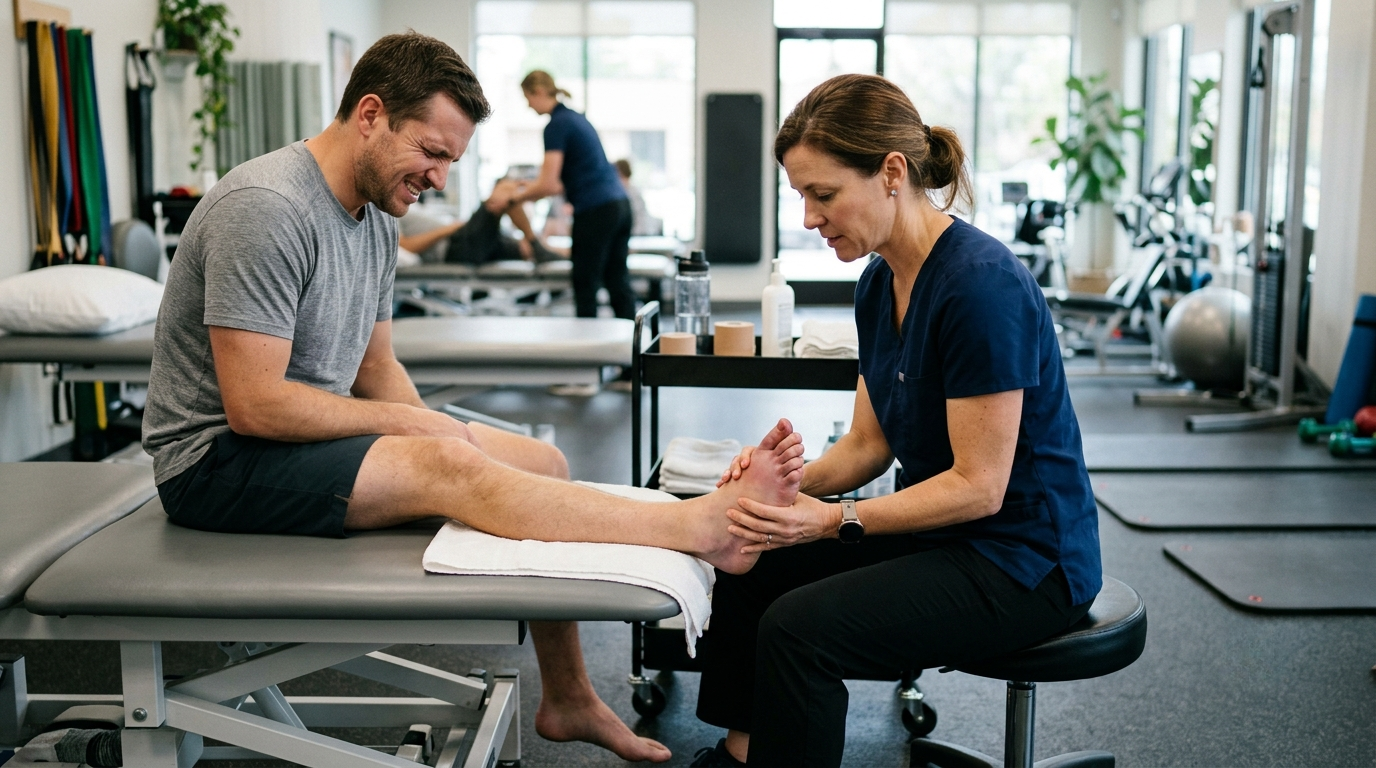
Most stubbed toes get better on their own within a few days, but a handful of warning signs mean it’s worth having someone take a closer look. See a specialist if the toe pain is severe or doesn’t ease up within a few hours, if you can’t put weight on your foot, or if the toe looks crooked, badly swollen, or numb; numbness in particular is one of the other symptoms that shouldn’t wait for a follow-up visit.
Visible cuts or scrapes near the nail bed are worth having checked too, even if the rest of the injury seems minor. Signs of infection, such as redness, warmth, or pus around the nail, also deserve prompt medical attention, especially if you live with diabetes or another condition that slows healing. A second round of signs of infection days later, after things seemed to be improving, is just as worth a call as the first. If what you’re left with is lingering pain that just won’t fade, that’s the moment to stop waiting it out. Left untreated, a broken bone here can lead to long term complications like a poorly healed joint or a permanently altered gait, so it’s always better to have a professional check things out than to wait and hope it resolves on its own.
A stubbed toe is usually nothing more than a painful inconvenience, but it’s not something to assume without a closer look. Paying attention to how the toe pain changes over the following day or two is the best way to tell whether you’re dealing with simple bruising or something that needs professional care.
The team at Wisconsin Foot & Ankle Clinic sees toe injuries like this often, from a quick bump on the stairs to fractures that need a more involved treatment plan. If your toe still doesn’t feel right after a day or two, reach out to our team; we’ll take a look and help you get back to pain-free days on your feet.
Frequently Asked Questions
1. When is a stubbed toe more than just a minor injury?
Most stubbed toes are short-lived injuries that get better within a few days, but lingering severe pain or infection with continued swelling pain can signal something more serious. If your toe stays very painful, looks crooked, feels numb, or the swelling does not improve after a week, that can point toward a fracture or another severe injury that needs proper diagnosis rather than simple home care. Persistent redness, warmth, or drainage around the nail are also warning signs worth getting checked, especially if you have a condition that slows healing, such as diabetes or arthritis.
2. Can a stubbed toe point to a bigger foot problem?
A stubbed toe can sometimes uncover underlying foot and ankle needs, such as arthritis, gout, or pressure problems from corns, calluses, hammertoe, or bunions that make the toe more vulnerable to trauma. When the toe pain prevents walking normally or keeps returning after minor bumps, it may be a sign that the toe structure or alignment needs attention. In these cases, a proper diagnosis from a foot and ankle specialist helps distinguish between a straightforward sports injury and a toe that’s already under strain from other conditions.
3. What should I watch for in the first week after a stubbed toe?
The first week is when signs of how serious the injury is usually become clear. Normal bruising and tenderness should gradually improve, and it should get easier to walk without limping. Week-one signs that something is wrong include toe pain that gets worse instead of better, swelling that does not go down, or new symptoms such as numbness or increasing stiffness. If you notice any of these, or if severe pain persists when you put weight on the foot, it is time to move beyond home treatment and seek medical care for a proper gait and foot exam rather than waiting for it to resolve on its own.
4. How do doctors diagnose severe injuries after a stubbed toe?
When toe pain does not match what a typical stubbed toe feels like, a specialist will start by watching how you walk and checking which motions cause pain. They will examine the toe for deformity, tightness, or signs of gout or arthritis, and look for corns, calluses, hammertoe, or bunions that could be adding extra pressure. If there is concern about a fracture or ligament damage, imaging such as an X-ray or, in more complex cases, advanced scans may be used. This step helps distinguish routine toe trauma from severe injuries that need more specific treatment.
5. What treatments are available if my stubbed toe is more serious?
Treatment options depend on whether the injury is limited to bruising or involves a fracture, torn ligament, or nail damage. Simple stubbed toes often respond to rest, ice, elevation, and over-the-counter pain relievers, along with roomy footwear that reduces pressure on the toe. More serious injuries may require buddy taping, a stiff-soled shoe, or a walking boot to keep the toe stable while it heals, and severe injuries sometimes need procedures such as splinting or correcting a dislocation. Early medical care helps guide the right treatment and reduces the risk of long-term problems, such as chronic pain or altered gait.


