

If you push off hard during a game and feel a sharp pain shoot through your big toe, or that same joint has been stiff and sore for weeks without one clear moment you can point to, you may be dealing with turf toe. It's common among athletes, but it also shows up in people …


If you push off hard during a game and feel a sharp pain shoot through your big toe, or that same joint has been stiff and sore for weeks without one clear moment you can point to, you may be dealing with turf toe. It’s common among athletes, but it also shows up in people who simply spend a lot of time on their feet, and it can make walking, standing at work, or getting through a normal workout surprisingly difficult. Most cases of turf toe respond well to the right treatment, as long as the injury is caught early.
At Wisconsin Foot & Ankle Clinic, we see turf toe often in athletes who play on artificial turf, but also in weekend warriors, dancers, and people who never set foot on a field at all. Knowing what’s actually happening in the joint, and what to do about it, can shave weeks off your recovery.
What Turf Toe Really Means
The big toe joint, medically known as the metatarsophalangeal joint or MTP joint, is where this sprain happens. This is the joint that connects the base of your big toe to the rest of your foot, and it does a lot of heavy lifting every time you walk, run, or push off the ground. When that joint bends too far backward, the soft tissue, ligaments, and tendons that hold it together can stretch or tear, and that stretching or tearing is what turf toe actually is.
It typically happens when your toe stays flat on the ground while your heel lifts up, forcing the joint into a position it isn’t built to handle. Add force from running, jumping, or a sudden change of direction, and the soft tissue around the joint can give way. Two small sesamoid bones sit underneath the joint as well, and in more severe cases these can be affected too.
Where Turf Toe Gets Its Name
The term “turf toe” dates back to the 1970s, when artificial turf became more common in football and this kind of turf toe injury seemed to increase along with it, a pattern well documented in orthopaedic sports medicine research. Artificial turf is a harder, less forgiving surface than natural grass, and the athletic shoes worn on it at the time were often too flexible, which let the toe bend further than it should. The name stuck, even though this painful injury isn’t limited to football players or to turf at all. Today it shows up just as often in soccer, basketball, and dance, along with plenty of everyday situations that have nothing to do with organized sports.
The Three Grades of Turf Toe
Foot and ankle doctors classify turf toe injuries into three grades, and knowing which one you’re dealing with helps guide your entire treatment plan. A grade 1 injury involves mild stretching of the soft tissue, without an actual tear. There’s usually some tenderness and mild swelling, and the toe’s range of motion stays fairly normal.
A grade 2 injury means partial tearing of the ligament. This brings more noticeable pain, swelling, and bruising, along with real limits on the big toe’s range of motion and how much weight you can bear on it. A grade 3 injury is a complete tear, and it’s the most serious of the three. Pain and swelling are severe, the joint may feel unstable or even look out of place, and putting any weight on it becomes extremely difficult, sometimes with extreme pain at the injury site.
Common Causes of Turf Toe
Most cases of turf toe come down to one basic mechanism: the big toe gets bent too far upward, past its normal range of motion, while under load. Exactly how that injury occurs can look pretty different from one person to the next.
Sports and Repetitive Stress
Football players are among the athletes most likely to develop turf toe, since the sport involves constant sprinting, cutting, and pushing off the toes at high speed on artificial turf, and it’s one of the more common sports injuries we see in active patients. Dancers face a similar risk from repeated jumping. Turf toe often builds gradually from repeated stress rather than one dramatic moment, with small amounts of strain adding up over practices and games until the soft tissue finally gives way.
Sudden trauma is just as common a cause of turf toe. A tackle that catches your toe planted on the ground, an awkward landing, or a hard push-off during a sprint can hyperextend the joint in an instant, and this is how most turf toe injuries among football and soccer players actually happen.
Footwear and Surface Factors
Playing on artificial turf raises the risk of turf toe because the surface doesn’t give the way natural grass does, so more force gets transferred straight into the toe joint. Athletic shoes that are too flexible in the forefoot compound the problem, since they let the toe bend further than a stiffer, stiff soled shoe would allow. Football and soccer players in particular benefit from stiff soled shoes built to stabilize the forefoot rather than flex freely at the toe, which can help prevent turf toe before it starts.
Everyday Causes Beyond the Field
You don’t have to be an athlete to end up with a turf toe injury. Choosing to wear shoes that are unsupportive, like flip-flops or worn-out sneakers, missteps on uneven ground, or simply putting too much force through the big toe joint during ordinary activity, can all lead to the same kind of joint strain. Anyone who spends long hours on their feet in shoes that offer little proper footwear support is at some risk, whether or not sports are involved.
Symptoms and Warning Signs
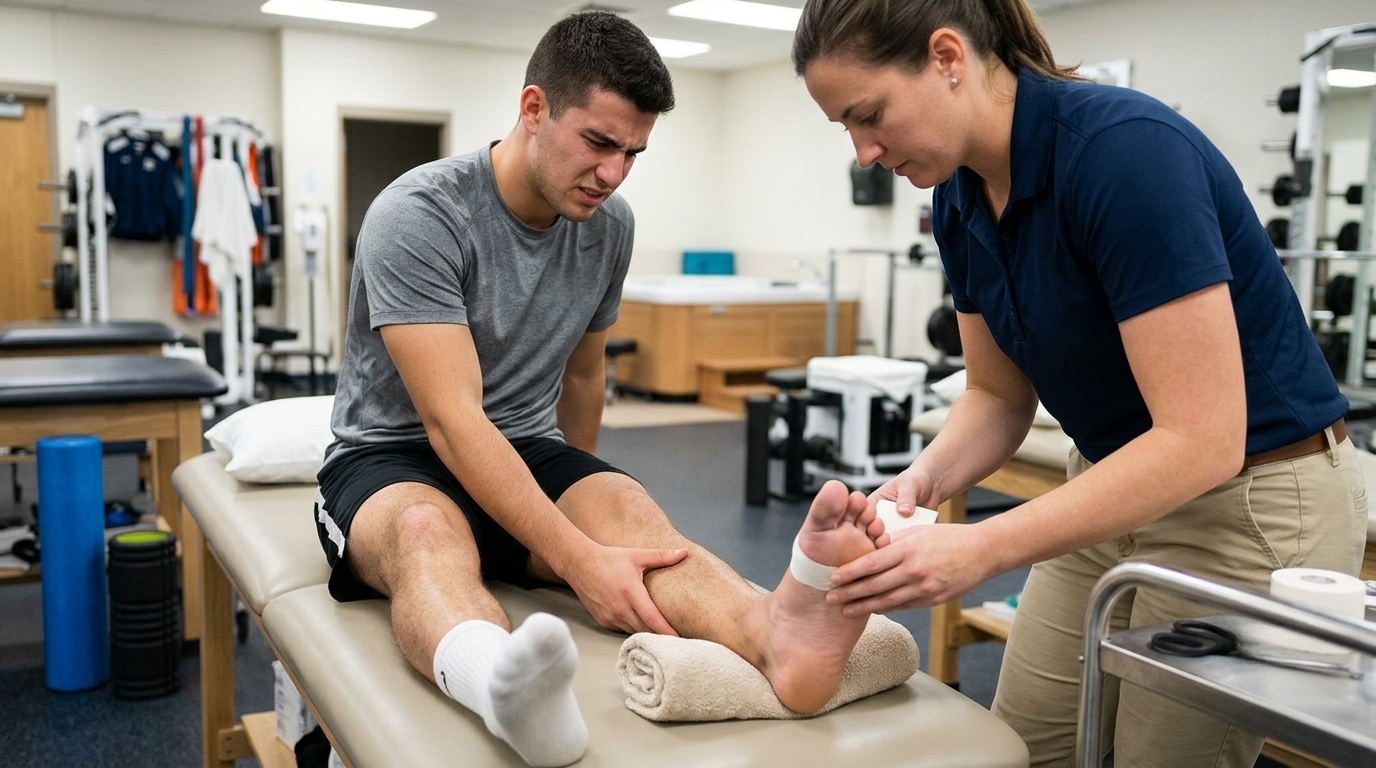
Symptoms of turf toe can range from a mild ache to severe pain bad enough to make walking nearly impossible, and the pattern often depends on how the injury happened in the first place.
What You’ll Likely Notice
Pain at the base of the big toe is the symptom almost everyone with turf toe reports, and it often gets worse with walking, running, or pushing off. Swelling and bruising around the big toe joint are common too, sometimes spreading across the top or bottom of the foot in more severe cases. Many people also notice limited toe movement, where bending the toe up or down feels stiff, weak, or simply wrong, along with a general sense of joint stiffness.
Some patients describe the joint as feeling loose or unstable, especially after a more serious injury. Difficulty putting weight on the foot, or a noticeable change in the way you walk to avoid pressure on the toe, is another common sign that this is more than routine soreness.
Sudden Injury Versus Gradual Onset
If turf toe happens from a sudden injury, you may hear or feel a pop right as the injury happened, and the pain typically starts immediately. When turf toe symptoms develop gradually from repeated stress instead, they tend to build slowly over days or weeks, often starting as mild discomfort that keeps coming back and getting a little worse each time. Either pattern is worth paying attention to, since symptoms of turf toe tend to intensify the longer the underlying strain continues.
Warning Signs That Need Attention Now
Certain symptoms shouldn’t wait. Severe pain that keeps you from bearing weight at all, a toe that looks out of place or dislocated, and swelling or bruising that spreads quickly are all signs of a serious injury. If any of these apply to you, it’s best to get evaluated rather than trying to wait out an untreated turf toe injury at home.
How Turf Toe Is Diagnosed
Your foot and ankle doctor usually starts with a conversation about how the injury happened, whether it was sudden or gradual, and which movements make the pain worse. From there comes a physical exam, gently checking the joint’s range of motion and pressing on different areas to pinpoint exactly where the tenderness is coming from.
Imaging often plays a role too, particularly when the exam suggests a more significant turf toe injury. X-rays can rule out a fracture or show whether the sesamoid bones were affected, while an MRI shows how much of the soft tissue has been stretched or torn. Once turf toe is diagnosed with the right grade, it becomes much easier to match the treatment to the actual severity of the injury.
Treatment Options for Turf Toe
The right way to treat turf toe depends heavily on the grade of the injury, but most cases, even significant ones, can be managed with conservative care rather than surgical intervention.
Rest, Ice, and the RICE Approach
Conservative treatment is the starting point for grade 1 and grade 2 turf toe injuries. Ice, compression, and elevation, paired with proper rest, make up the classic approach: rest comes first, since continuing to push through pain risks turning a minor injury into something worse. Ice packs help reduce swelling, especially in the first couple of days, and an elastic bandage along with elevating the foot supports that same goal. Over-the-counter anti-inflammatory medication can also help reduce pain and swelling while the tissue heals.
Immobilization With a Boot or Taping
More significant sprains often call for some form of immobilization to protect the joint while it heals. A walking boot limits how much the toe bends with each step, which takes pressure off the healing soft tissue, and mild cases may only need two to three weeks in one before moving on. In milder cases, taping the big toe to the toe beside it can offer similar support, restricting painful motion while still allowing you to get around. Stiff soled shoes serve the same purpose once you’re ready to transition out of a boot, since they prevent the toe from bending as far as a flexible shoe would allow.
Physical Therapy and Rebuilding Strength
Once the acute pain and swelling settle down, physical therapy becomes an important part of treating turf toe and getting back to full function. A physical therapist can guide you through exercises that restore range of motion, rebuild push off strength, and address any lingering joint stiffness from the injury. This step matters even for a minor injury, since skipping it can leave the toe weaker and more prone to future injuries.
When Surgery Becomes Necessary
Surgery is uncommon, but surgical repair does become necessary in some grade 3 injuries, particularly when the ligament is completely torn or the joint has been affected in a way that conservative treatment can’t fully address, sometimes requiring four to eight weeks of recovery afterward. The goal of surgical intervention is to restore the joint’s stability and normal range of motion so you can return to full activity. If your doctor recommends this route, it’s typically because imaging and a physical exam have shown a level of damage that simply won’t heal well on its own.
When to See a Foot and Ankle Doctor
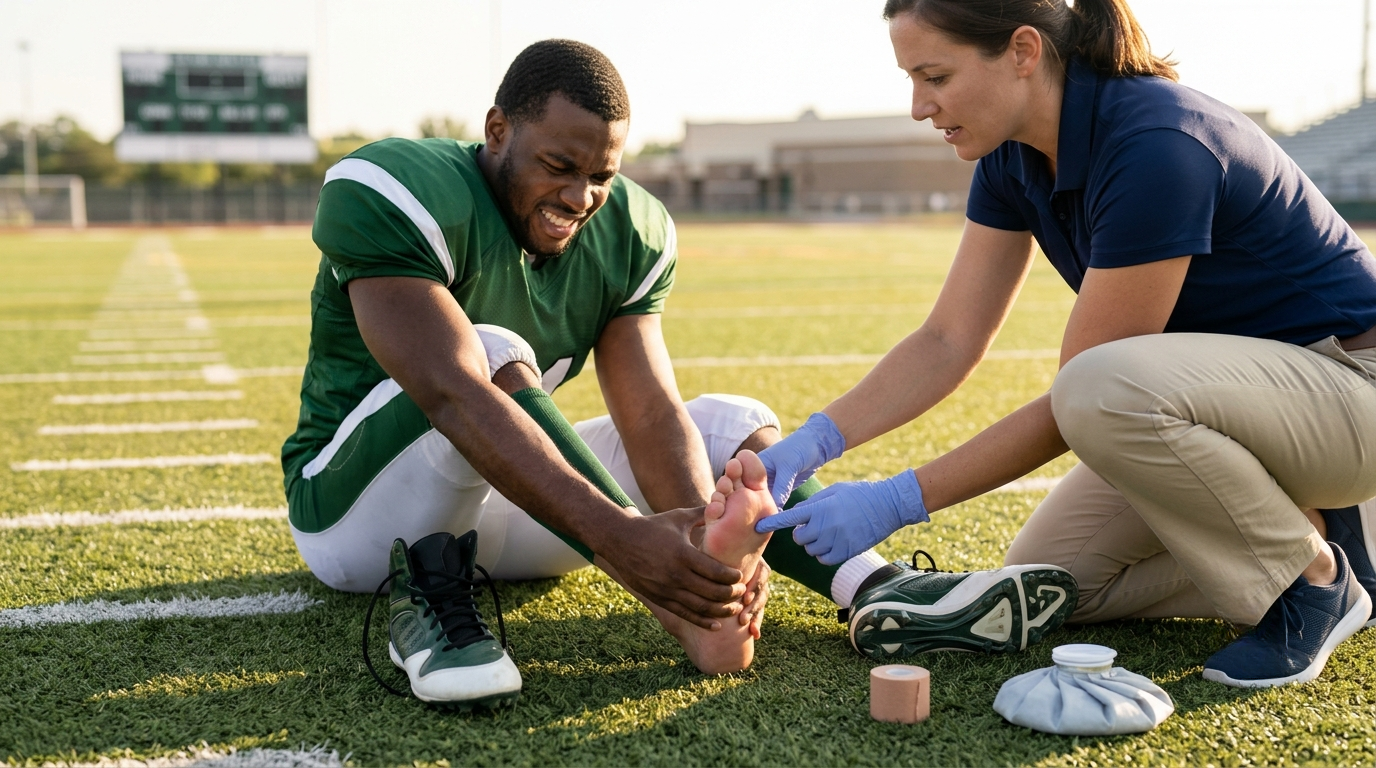
Mild turf toe symptoms sometimes improve with a few days of rest and basic home care, but plenty of cases benefit from seeing foot and ankle surgeons for a proper evaluation, even when the pain doesn’t seem severe. If your symptoms aren’t improving after several days, or if they’re getting worse instead of better, it’s a good idea to have the joint checked out.
Certain signs call for prompt attention rather than a wait-and-see approach. Severe pain, an inability to bear weight, visible deformity, or rapidly spreading swelling and bruising all point toward a serious injury that deserves a closer look. Left untreated, turf toe can lead to ongoing joint stiffness, chronic pain, and even long-term arthritis in the big toe, a risk confirmed in published clinical research, so getting an accurate diagnosis early tends to make the whole recovery process shorter and more predictable, and helps prevent future injuries to the same joint.
Getting Back on Your Feet
Recovery time for turf toe varies depending on the grade of the injury, ranging from about a week for mild cases up to several months for severe tears. What matters most isn’t rushing back before the joint is ready, but following proper treatment that matches the actual severity of your injury. Most people who take that approach return to their normal activities, including playing sports, without lasting problems.
If you’re dealing with big toe pain that isn’t improving, or you’re just not sure whether what you’re feeling is turf toe or something else, reach out to our team at Wisconsin Foot & Ankle Clinic. Getting evaluated early is one of the simplest ways to protect your toe joint and get back to moving comfortably.


