

If you've been dealing with heel pain, Achilles pain, or another stubborn injury that just won't quiet down no matter what you've tried, you may have heard your provider mention shockwave therapy. It's a question we hear often at Wisconsin Foot & Ankle Clinic: what is shockwave therapy, and could it actually help with pain …


If you’ve been dealing with heel pain, Achilles pain, or another stubborn injury that just won’t quiet down no matter what you’ve tried, you may have heard your provider mention shockwave therapy. It’s a question we hear often at Wisconsin Foot & Ankle Clinic: what is shockwave therapy, and could it actually help with pain that’s been sticking around for months? The short answer is that shockwave therapy is a noninvasive treatment that uses focused sound waves to jump-start your body’s own healing process, and for a lot of our patients, it’s the missing piece between conservative treatment that didn’t quite work and surgery they’d rather avoid.
What Is Shockwave Therapy?
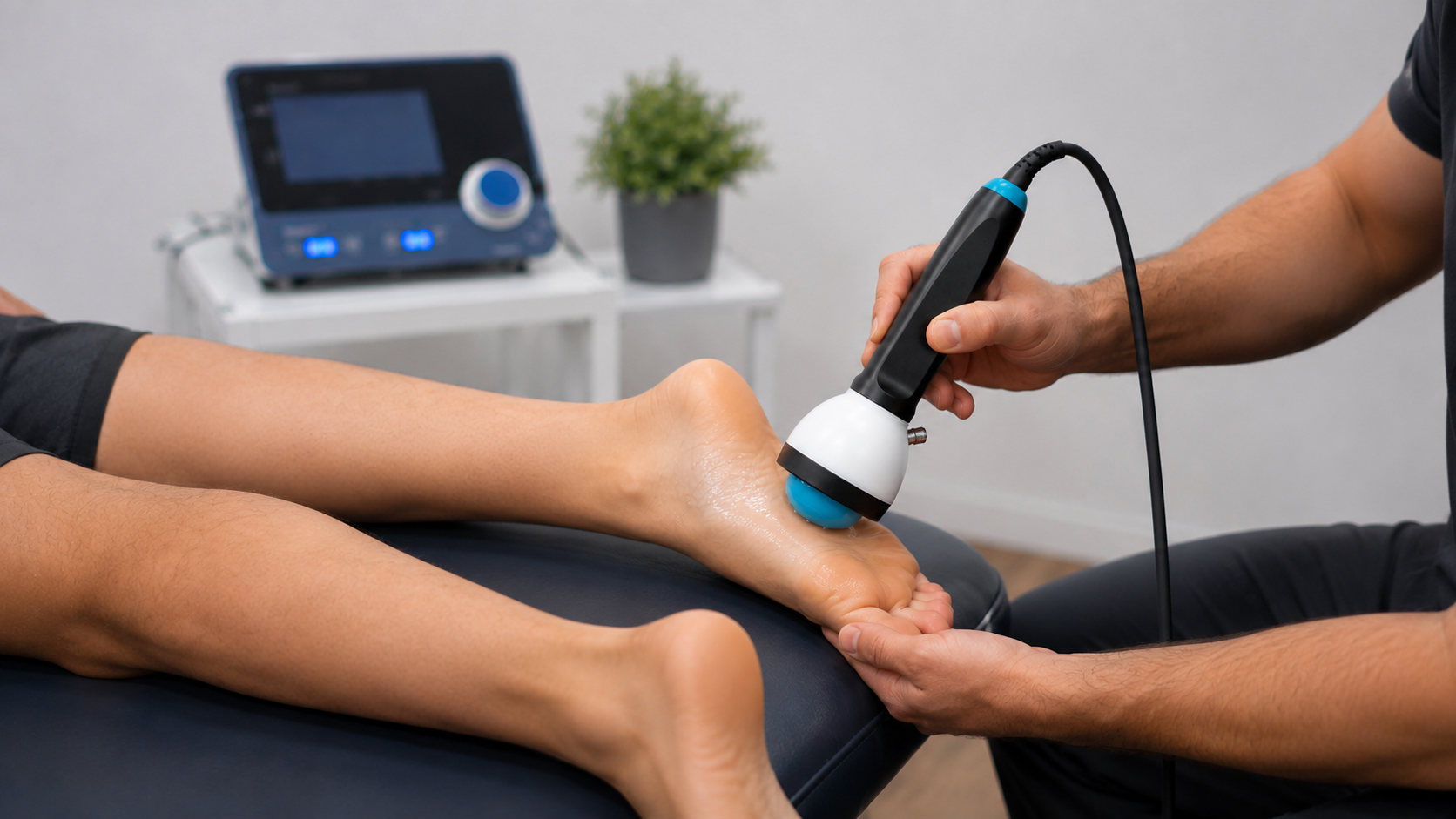
Shockwave therapy, also called extracorporeal shockwave therapy, delivers pulses of acoustic energy through the skin to an injured tendon, ligament, or area of soft tissue. “Extracorporeal” simply means the energy is generated outside the body and directed in through a handheld device, so there’s no cutting, no needles, and no anesthesia involved. A provider applies a bit of gel to the treatment area and presses the shockwave device against the skin over the injured area, and the machine sends a rapid series of sound wave pulses into the tissue underneath. Patients treated with shockwave therapy for the first time are often surprised by how quickly the whole appointment wraps up. You may also see it written as extracorporeal shockwave therapy ESWT in clinical notes or research, since ESWT is just shorthand for the same treatment.
Professional athletes and the athletic trainer working alongside them have leaned on shockwave therapy for years to manage pain from injuries without missing games, and that track record is part of what brought it into general orthopedic and podiatric practice. What started as a niche procedure has become a fairly common one, and today it’s used to treat a wide range of injuries well beyond the sports world.
Where Shockwave Therapy Came From
This isn’t a brand-new idea. Extracorporeal shockwave therapy was originally developed to break up kidney stones, using focused acoustic waves to shatter them into pieces small enough to pass on their own, a technique that remains a standard, well-studied option in urology today. Researchers later noticed that lower-energy versions of the same technology had a very different effect on soft tissue: instead of breaking things apart, it seemed to wake up the body’s own healing process in tendons and ligaments that had stopped repairing themselves properly. That discovery is what eventually led to shockwave therapy being used for musculoskeletal conditions, including chronic pain that sits close to bone, like the ones we see every day at our Brookfield clinic.
FDA status depends on the specific device and intended use. Wisconsin Foot & Ankle Clinic uses StemWave® focused wave technology. Its manufacturer is registered with the FDA and the device is FDA-listed; registration and listing do not mean FDA approval or clearance.
How Does Shockwave Therapy Work?
The name sounds a little intimidating, but the mechanism is fairly straightforward once you understand what’s actually happening inside the tissue. So how does shockwave therapy work during an actual appointment? The focused shockwave device sends high energy acoustic waves into the injured area in bursts that last nanoseconds or microseconds. Each pulse creates a small, controlled amount of mechanical stress in the tissue, which your body reads as a signal to start repairing.
The Role of Blood Flow, Nerves, and Healing
That signal sets off several things at once. Increased blood flow to the area brings in more oxygen and nutrients through small blood vessels feeding the injured tissue, which helps damaged cells rebuild. Better circulation through those same blood vessels is also part of why some sports medicine specialists use shockwave treatment outside of foot and ankle care, including for erectile dysfunction, where the same boost in blood flow can improve circulation to other underperforming tissue.
The therapy also appears to disrupt pain signals at the nerve endings near the injury, which helps reduce pain and is part of why so many patients experience pain relief within a session or two, well before the tissue has fully healed. Over the following weeks, the healing process encourages the body to lay down new collagen and repair damaged fibers in the tendon, muscle, or ligament rather than leaving the area stuck in a chronic, unhealed state.
How Focused Shockwave Therapy Targets the Injury
Focused shockwave therapy concentrates energy at a specific depth, which is what makes it effective for tissue closer to bone or deeper structures, such as a heel spur pressing on bone or a stubborn case of Achilles tendinopathy. Your provider adjusts the depth and energy settings on the focused device based on where your pain is and how deep the tissue sits, so the energy reaches what needs it instead of stopping at the skin’s surface.
What Shockwave Therapy Feels Like
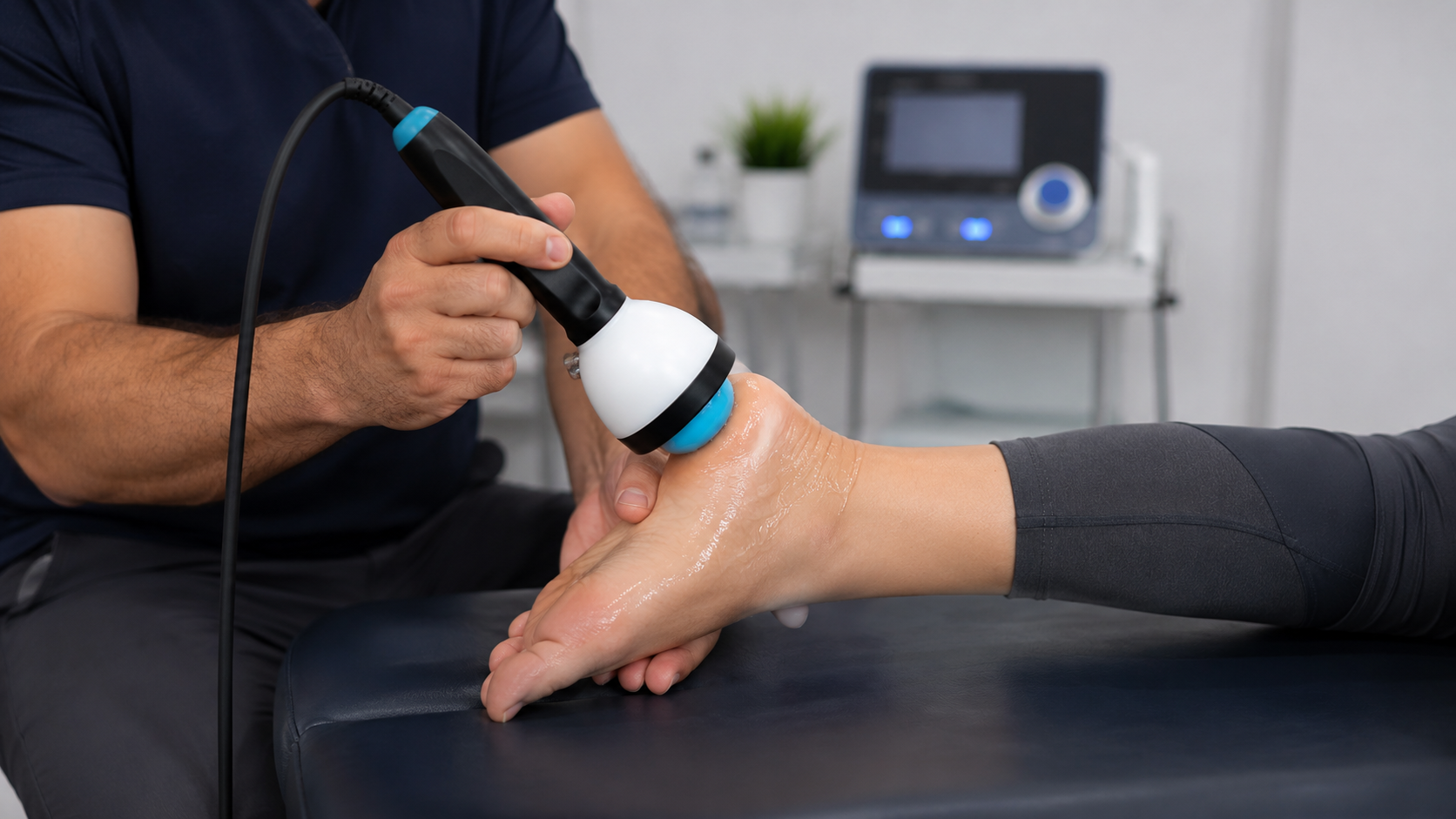
Patients describe the sensation as an odd tapping or clicking rather than sharp pain, closer to a firm, rhythmic knock against the skin than anything else. It’s more intense than a deep tissue massage, but it shouldn’t be unbearable, and your provider will start at a lower energy setting before adjusting based on your comfort. Your provider aims to keep things at a level you can tolerate for the length of the procedure, not push you through anything that feels like too much.
Some mild soreness, skin redness, or minor swelling where you were treated afterward is normal and usually settles within a few days. Because there’s no incision and no medication involved, patients are typically back to normal activity the same day or the next, though we’ll often ask you to ease up on high-impact exercise for a short stretch so the tissue has room to respond to treatment.
Who Might Be a Good Candidate for Shockwave Therapy
Shockwave therapy tends to work best for chronic pain and nagging injuries that haven’t responded to more conservative treatment, rather than a fresh, acute injury from last week. Most patients who end up receiving shockwave therapy have already tried rest, stretching, orthotics, or a course of physical therapy without lasting relief, and are looking for something short of more invasive treatments like injections or surgery.
Conditions Shockwave Therapy Can Help
Some of the sports injuries and chronic conditions where shockwave therapy helps heal injuries most effectively at Wisconsin Foot & Ankle Clinic include:
- Plantar fasciitis and stubborn heel pain
- Achilles tendon pain and Achilles tendinopathy
- Tennis elbow-type tendon injuries elsewhere in the arm
- Greater trochanter pain syndrome and other chronic hip-adjacent leg pain
- Certain stress fracture cases where healing has stalled
- Shoulder pain tied to calcific buildup in the tendon
- Patellar tendinopathy and related knee pain
Patients who receive shockwave therapy for these kinds of chronic tendon and ligament injuries often notice a real reduction in pain within the first few visits, especially compared with other treatments that only manage symptoms rather than address the underlying tissue.
Who Should Avoid Shockwave Therapy
It’s just as important to know who shouldn’t receive shockwave therapy. We typically avoid it for patients who are pregnant, anyone with an active infection near the injured area, people with certain tumors, and patients with heart disease or blood clotting problems who take blood thinners. Before starting, your provider or primary care provider will walk through your health history and take a look at the area, sometimes with imaging, to confirm this treatment is a good fit and to rule out anything that needs a different diagnosis first.
What Treatment Actually Involves
A typical course of shockwave therapy isn’t a single visit. Most treatment plans call for a series of sessions that each last well under an hour, often spaced about a week apart. You’ll be positioned so your provider can reach the injured tendon or muscle throughout the procedure, and the shockwave therapy machine delivers its pulses directly over the treated site.
Shockwave therapy is generally considered a conservative treatment option, meaning it’s something we reach for before recommending surgery, not after. For patients dealing with chronic pain in the foot or ankle who’ve already tried other treatments without lasting success, it’s often the next logical step, and many sports medicine specialists and athletic trainers now build shockwave treatment into a standard recovery plan for athletes who want to reduce pain and get back to their sport without missing an entire season. Because it’s a non invasive procedure, there’s no surgical recovery timeline to plan around, and most people can keep working and staying active around their appointments.
How Many Sessions You’ll Need
At Wisconsin Foot & Ankle Clinic, StemWave® care plans typically include eight to twelve sessions, although the number and timing of visits depend on your needs and response to treatment. Your doctor will check your progress at each visit and adjust the plan if your body is responding faster, or slower, than expected. Healing from a chronic injury isn’t always a straight line, so a little patience through the first couple of weeks of treatment goes a long way.
Cost, Insurance, and Our $49 Intro Offer
Insurance plans often don’t cover shockwave therapy the way they cover more traditional treatments, and out-of-pocket costs for a full package can add up. That’s part of why we offer a $49 intro session at Wisconsin Foot & Ankle Clinic, so you can experience the treatment firsthand and talk through a full plan with your doctor before committing to a longer course of care.
Common Questions About Shockwave Therapy
Is shockwave therapy painful?
Most patients tolerate the procedure well. You’ll feel pulses of energy and some discomfort at the injured area, but your doctor controls the intensity throughout the session so the discomfort stays manageable rather than something you have to grit your teeth through.
Is shockwave therapy the same as surgery?
No. Shockwave therapy is a non invasive alternative to more invasive treatments, with no incisions, no anesthesia, and no time off from work to recover. It’s typically used before surgery is ever on the table, not as a replacement for a procedure your doctor has already recommended.
Can shockwave therapy help old sports injuries?
Yes. Chronic sports injuries, especially in a tendon or muscle that never quite healed right the first time, are some of the injuries that respond best to shockwave therapy. Old cases of tennis elbow, lingering plantar fasciitis, and shoulder pain that flares up during throwing or lifting all tend to improve with a course of treatment. It’s common enough that an athletic trainer traveling with a team will sometimes carry a shockwave device on the road, ready to use the moment an old injury flares up.
Does shockwave therapy replace physical therapy?
Not usually. Shockwave therapy and physical therapy tend to work best together rather than instead of each other. Many patients treated with shockwave therapy keep up a simple stretching and strengthening routine between sessions, since that helps tissue hold onto the gains from treatment and helps reduce pain over the long run. We use shockwave therapy for a wide range of injuries: acute sports injuries in young athletes, long-term overuse injuries in older, active patients, stubborn tendon injuries that never fully resolved, and nagging ligament injuries that come back after rest alone. The shockwave therapy machine we use in-office is compact and quiet, which tends to surprise patients expecting something more clinical-feeling, and for most patients, combining this kind of therapy with a simple home exercise routine is what finally gets old injuries the attention they need.
When To See a Foot and Ankle Doctor
If you’ve been managing foot or ankle pain on your own for weeks with ice, rest, and over-the-counter relief and it isn’t improving, that’s a good sign it’s time to get it looked at rather than waiting it out further. The same goes for pain that keeps you from your usual routine, disrupts your sleep, or has crept up gradually and never quite gone away. A foot and ankle doctor can confirm the actual source of the pain, since plenty of injuries can feel similar on the surface but call for very different treatment.
You should also see a doctor sooner rather than later if you’re an athlete or generally active person dealing with an injury that’s kept you sidelined, since chronic tendon and ligament injuries tend to respond better to treatment the earlier they’re addressed. Waiting too long can sometimes turn a case that would have responded well to shockwave therapy into one that needs a more involved surgery down the road, and an accurate diagnosis early on almost always means a shorter path back to feeling like yourself.
Foot and ankle pain that lingers isn’t something you have to just live with. Whether shockwave therapy ends up being the right fit for your specific injury or your doctor recommends a different path, getting an accurate diagnosis is what actually moves you toward feeling better. Our team at Wisconsin Foot & Ankle Clinic will talk through your symptoms, take a look at what’s actually going on (sometimes with imaging), and map out a treatment plan built around your body and your goals.


